
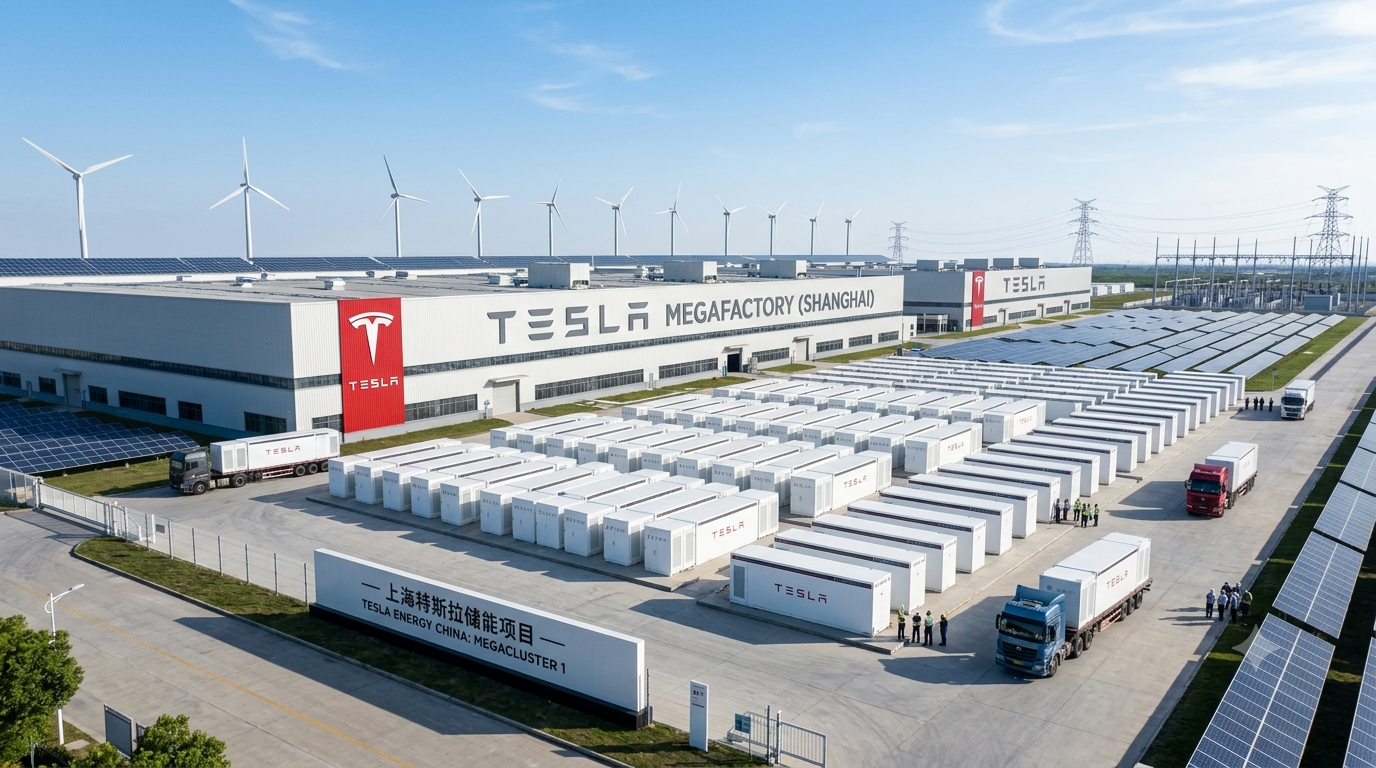
The global shift toward green power faces one massive hurdle: intermittency. Solar and wind energy are abundant, but they are not always available when the grid needs them most. This is precisely where the Tesla China battery project renewable energy ecosystem steps in to bridge the gap. By establishing its massive Megafactory in Shanghai, Tesla is no longer just an automotive company; it has evolved into a vital infrastructure leader.
This development is transforming the global energy landscape, accelerating the adoption of clean energy, and providing a scalable solution to grid instability. Here is an in-depth analysis of how Tesla’s energy storage systems are reshaping the future of green utilities.
The Genesis of Tesla’s Energy Footprint in China
Tesla’s journey in China began with electric vehicles, but the company’s long-term vision has always focused on sustainable energy ecosystems. The establishment of the Shanghai Megafactory marks the first dedicated energy storage facility built by Tesla outside of the United States.
From Gigafactory to Megafactory
While Gigafactory Shanghai focused heavily on the mass production of Model 3 and Model Y vehicles, the Megafactory in the Lin-gang Special Area is built entirely for utility-scale battery production. Following its official launch of mass production in early 2025, the facility has scaled rapidly to meet the soaring global demand for grid stability tools.
Production Scale and Capacity
The Shanghai Megafactory features a design capacity capable of manufacturing 10,000 Megapack units annually. This represents roughly 40 gigawatt-hours (GWh) of energy storage capacity entering the global supply chain every single year. In its first full year of operations, the plant delivered over 2,000 commercial Megapack systems, signaling an incredibly fast operational ramp-up.
Inside the Tesla China Battery Project: Renewable Energy Integration
To understand why this infrastructure matters, it is crucial to analyze how the tesla china battery project renewable energy initiative functions on a practical level. The core technology powering this project is the Megapack, a massive, container-sized lithium-ion battery system designed specifically for industrial grids.
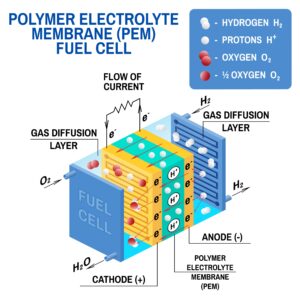
(Note: While hydrogen fuel cells represent a different branch of clean energy technology, large-scale electrochemical installations like Tesla’s Megapack operate on a complementary industrial footprint to stabilize national grids.)
How Megapacks Act as Smart Regulators
Renewable energy sources like wind and solar produce electricity variably. A sudden drop in wind speed or a cloudy day can cause grid frequency to fluctuate, resulting in localized power outages.
Tesla’s Megapack functions as a “smart regulator” for urban and regional electricity grids. The system works through a simple but highly sophisticated process:
-
Charging During Surplus: When solar panels or wind turbines produce excess electricity during low-demand hours, the Megapack stores the energy.
-
Discharging During Peak Strain: When energy demand spikes or renewable generation drops, the system instantly discharges power back into the grid.
-
Millisecond Response Times: Unlike traditional fossil-fuel peaker plants that take minutes or hours to fire up, battery storage reacts in milliseconds to stabilize voltage and frequency.
The Landmark $557 Million Grid Storage Deal
Tesla expanded its commercial footprint by signing a landmark $557 million (4 billion yuan) agreement with the Shanghai local government and China Kangfu International Leasing Co. This project establishes a massive grid-scale battery storage station directly integrated into China’s energy infrastructure.
Acting as an industrial-scale backup power bank, this facility represents Tesla’s largest dedicated energy project within Asia. It plays an active role in managing urban electricity supply, reducing the grid’s reliance on coal during periods of peak power usage.
Strategic Impact on China’s Neutrality Milestones
China currently generates more renewable energy than any other country on Earth. However, the nation’s rapid deployment of solar fields and wind farms requires an equally robust energy storage framework to avoid massive energy waste.
Supporting the 2030 and 2060 Climate Goals
China has committed to reaching peak carbon emissions by 2030 and achieving full carbon neutrality by 2060. Meeting these targets is impossible without localized energy storage infrastructure. The deployment of utility-scale battery projects helps mitigate the risk of curtailment—a scenario where clean energy goes unused because the grid lacks the capacity to store or transmit it.
Decreasing Dependence on Coal Peaker Plants
Traditionally, when cities experience sudden spikes in electricity demand, grid operators rely on coal-fired peaker plants to supply extra power. By replacing these carbon-heavy assets with large-scale battery banks, regional grids can substantially reduce their overall carbon footprint. Experts estimate that large-scale battery developments of this magnitude could help mitigate millions of tonnes of carbon emissions over the next decade.
Global Supply Chain and Market Implications
The impact of the Tesla China battery project renewable energy framework extends far beyond domestic borders. The Shanghai Megafactory serves as a critical export hub, supplying grid operators worldwide with the hardware required for deep decarbonization.
+------------------------------------+
|     Tesla Shanghai Megafactory     |
|   (10,000 Megapacks / 40 GWh/yr)   |
+------------------------------------+
                  |
         +--------+--------+
         |                 |
         v                 v
  Domestic Grid      Global Exports
 (Zhejiang/Shanghai) (Europe & Australia)
Streamlining Global Supply Chains
By manufacturing Megapacks within China, Tesla capitalizes on a highly mature, localized supply chain for battery components, raw materials, and electronics. This localization minimizes manufacturing costs and shortens lead times for international projects.
Meeting Worldwide Grid Storage Demand
A significant portion of the Megapacks built at the Shanghai facility is designated for export to highly active renewable markets, including Europe and Australia. As international utility companies phase out fossil fuels, having a steady, high-volume supply of grid-scale batteries is vital to maintaining global energy security.
Future Growth: What Lies Ahead for Tesla Energy?
For years, Tesla’s automotive division dominated public attention. However, the rapid scaling of its energy division indicates a profound structural shift. The margins and deployment numbers for energy storage are currently outpacing automotive growth rates on a percentage basis.
As urban areas expand and the adoption of electric vehicles increases, electricity demand will continue to rise. Intelligent, software-driven energy storage systems are no longer an optional luxury for utility providers; they are a fundamental requirement for the modern world.
Frequently Asked Questions
What is the primary purpose of Tesla’s China battery project?
The project focuses on manufacturing and deploying utility-scale Megapack batteries to store renewable energy, stabilize local and international power grids, and reduce reliance on fossil-fuel peaker plants.
How much energy can Tesla’s Shanghai Megafactory produce?
The factory has an initial design capacity to manufacture 10,000 Megapack units per year, which equates to roughly 40 gigawatt-hours (GWh) of total energy storage capacity.
Why is battery storage necessary for renewable energy?
Renewable sources like solar and wind are intermittent. Battery storage systems capture excess electricity when generation is high and release it when generation drops, ensuring a continuous and reliable power supply.
Is Tesla exporting batteries made in China to other countries?
Yes. The Shanghai Megafactory operates as a primary global export hub, shipping commercial Megapack systems to major renewable energy markets across Europe, the Asia-Pacific region, and Australia.
Conclusion
The Tesla China battery project renewable energy ecosystem is a clear blueprint for the future of utility management. By combining world-class manufacturing speed with advanced energy storage technology, Tesla is actively addressing the core limitations of green energy. As the Shanghai Megafactory continues to scale its production toward maximum capacity, it will play an increasingly vital role in stabilizing grids, reducing carbon footprints, and enabling a fully sustainable energy economy worldwide.
What are your thoughts on the future of grid-scale battery storage? Let us know in the comments below, or share this article with your network to spread the conversation on sustainable energy solutions!
