
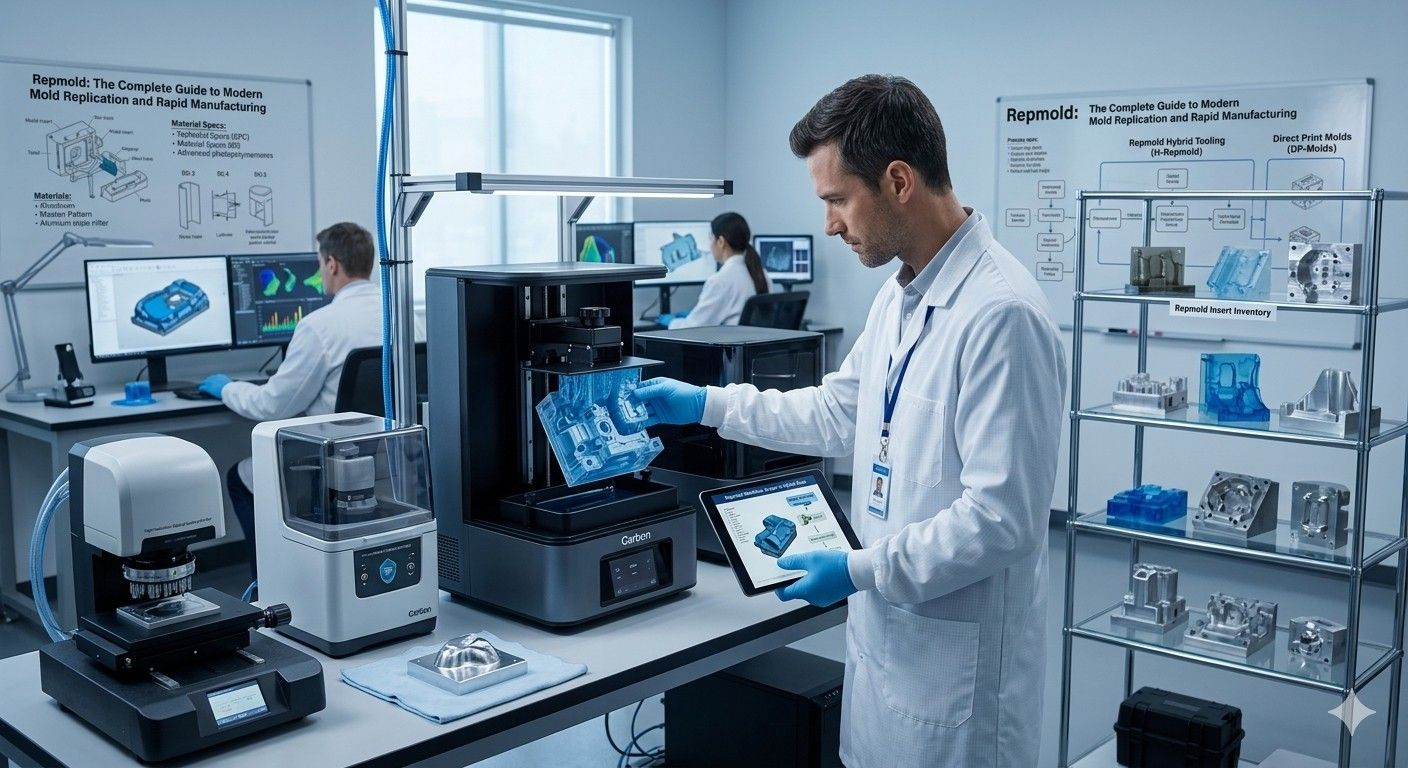
Manufacturing is changing faster than ever. Companies are under pressure to launch products quickly, reduce costs, and adapt to changing customer demands. This is where repmold comes into the picture.
If you’ve searched for repmold, you’re likely trying to understand what it means, how it works, and whether it can help improve product development and production processes.
In simple terms, repmold is a modern manufacturing approach that combines mold replication, rapid prototyping, digital design, and advanced production technologies to create molds faster and more efficiently than traditional methods. It helps businesses shorten development cycles, reduce tooling expenses, and bring products to market sooner.
This guide explains everything you need to know about repmold, including its benefits, applications, workflow, challenges, and future potential.
What Is Repmold?
Repmold is a manufacturing concept that blends mold replication techniques with modern digital manufacturing technologies, such as:
- CAD (Computer-Aided Design)
- 3D printing
- CNC machining
- Additive manufacturing
- Automation systems
- Digital simulation tools
Instead of relying solely on expensive and time-consuming traditional mold-making methods, repmold enables manufacturers to create molds quickly while maintaining precision and repeatability.
The term is commonly associated with:
- Rapid mold creation
- Prototype tooling
- Low-volume production
- Design validation
- Mold duplication
- Bridge manufacturing before mass production
Why Repmold Matters in Modern Manufacturing
Traditional mold production often requires:
- High upfront tooling costs
- Long lead times
- Limited design flexibility
- Expensive modifications
For companies operating in competitive industries, these limitations can slow innovation.
Repmold addresses these challenges by making mold creation faster, more adaptable, and more cost-effective. Manufacturers can test ideas, revise designs, and produce functional parts without waiting weeks or months for conventional tooling.
How Repmold Works
Understanding the repmold workflow helps explain why it has become increasingly popular across industries.
1. Digital Product Design
The process begins with a digital model created using CAD software.
Engineers design the product while considering:
- Dimensions
- Material requirements
- Manufacturing constraints
- Performance expectations
Digital simulation tools can identify potential issues before production begins.
2. Prototype Validation
Before creating a production mold, manufacturers typically produce prototypes.
This stage allows teams to:
- Test functionality
- Verify dimensions
- Evaluate performance
- Gather user feedback
Making changes at this stage is far less expensive than modifying a completed steel mold.
3. Repmold Creation
The actual repmold is then produced using advanced manufacturing methods such as:
- 3D printed molds
- Composite tooling
- Soft tooling
- Hybrid CNC-manufactured molds
These molds can often be created in days rather than weeks.
4. Production and Testing
The completed mold is used to manufacture parts for:
- Product testing
- Pilot production runs
- Limited commercial production
If changes are needed, engineers can quickly update the digital design and create a revised mold.
Key Benefits of Repmold
Faster Time to Market
One of the biggest advantages of repmold is speed.
Traditional tooling may take several weeks or even months. Repmold significantly reduces development timelines, allowing products to reach customers faster.
Lower Tooling Costs
Steel molds can be expensive, especially for startups and small manufacturers.
Repmold helps reduce costs by:
- Minimizing machining requirements
- Using alternative materials
- Enabling digital modifications
Improved Design Flexibility
Product designs often change during development.
With repmold, modifications can be made digitally and implemented quickly without rebuilding entire tooling systems.
Reduced Material Waste
Digital manufacturing processes help optimize material usage and minimize production waste. This supports sustainability goals while lowering operational expenses.
Better Product Validation
Manufacturers can test products thoroughly before investing in permanent tooling, reducing the risk of costly production mistakes.
Repmold vs Traditional Mold Manufacturing
| Feature | Traditional Molding | Repmold |
|---|---|---|
| Lead Time | Weeks to months | Days to weeks |
| Initial Cost | High | Lower |
| Design Changes | Expensive | Easy |
| Flexibility | Limited | High |
| Prototype Production | Slow | Fast |
| Waste Generation | Higher | Lower |
| Best Use Case | Mass production | Prototyping and low-volume production |
While traditional molds remain ideal for very large production runs, repmold excels during product development and early manufacturing stages.
Industries Using Repmold
Automotive Manufacturing
Automotive companies use repmold to:
- Test vehicle components
- Validate new designs
- Produce prototype parts
- Accelerate product launches
Consumer Electronics
Fast product cycles make repmold especially valuable for:
- Device housings
- Connectors
- Internal components
- Wearable technology
Medical Devices
Medical manufacturers benefit from:
- Rapid design iteration
- Small-batch production
- Customized device development
Aerospace
Engineers use repmold to evaluate:
- Lightweight structures
- Specialized components
- Complex geometries
Consumer Products
From kitchen gadgets to sports equipment, repmold helps brands refine products before large-scale production.
Technologies Behind Repmold
CAD Software
Computer-aided design forms the foundation of every repmold project.
Benefits include:
- Precision modeling
- Easy revisions
- Virtual testing
3D Printing
Additive manufacturing enables the rapid creation of prototype molds and tooling components.
CNC Machining
CNC equipment delivers the precision needed for high-quality mold production.
Automation
Modern repmold systems increasingly integrate automation for:
- Quality control
- Production monitoring
- Process optimization
AI-Assisted Manufacturing
Emerging systems use artificial intelligence to:
- Predict mold wear
- Improve design efficiency
- Optimize production workflows
Challenges and Limitations of Repmold
Although repmold offers many benefits, it is not perfect.
Limited Durability
Some repmold tooling materials may not withstand the extremely high production volumes achievable with hardened steel molds.
Software Dependence
Digital workflows require reliable:
- CAD systems
- Data management
- Automation platforms
Training Requirements
Companies often need skilled personnel who understand:
- Digital manufacturing
- Mold design
- Additive manufacturing technologies
Not Always Ideal for Mass Production
For production runs exceeding hundreds of thousands of units, traditional steel tooling may still provide better long-term economics.
When Should You Choose Repmold?
Repmold is often the best choice when:
- Product designs are still evolving
- Speed is critical
- Production volumes are moderate
- Customization is required
- Budget constraints exist
- Market testing is needed
Businesses launching innovative products frequently use repmold before transitioning to permanent tooling.
Future Trends in Repmold
The future of repmold looks promising.
Several trends are driving adoption:
AI-Powered Design Optimization
Artificial intelligence is improving mold design speed and accuracy.
Smart Factories
Industry 4.0 technologies are making remolding processes more connected and data-driven.
Sustainable Manufacturing
Companies are increasingly seeking methods that reduce waste and energy consumption.
Advanced Materials
New composites and high-performance resins are expanding the capabilities of repmold tooling.
Frequently Asked Questions About Repmold
What does repmold mean?
Repmold generally refers to a modern mold replication and rapid manufacturing approach that combines digital design, prototyping, and advanced tooling methods to create molds faster and more efficiently.
Is Repmold the same as injection molding?
No. Injection molding is a manufacturing process, while remolding is a broader approach used to create molds and tooling more quickly.
Is repmold suitable for large-scale production?
It depends on production volume. Repmold is ideal for prototyping, validation, and low-to-medium production runs. Traditional hardened steel molds often remain better suited for extremely high-volume manufacturing.
How much does repmold cost?
Costs vary based on complexity, materials, and production requirements. However, repmold typically reduces initial tooling expenses compared to traditional mold-making.
Which industries use repmold?
Automotive, aerospace, electronics, healthcare, consumer products, and industrial manufacturing sectors all use repmold technologies.
Does Repmold use 3D printing?
Yes. Many remold workflows incorporate 3D printing for rapid mold creation, prototyping, and design validation.
Conclusion
Repmold represents a major shift in how manufacturers approach tooling, prototyping, and product development. By combining digital design, rapid manufacturing, mold replication, and automation, repmold enables companies to innovate faster while reducing costs and waste.
For organizations seeking shorter development cycles, greater flexibility, and lower tooling risk, repmold offers a practical and future-ready solution. While traditional molds still have a place in high-volume production, repmold has become an essential tool for modern manufacturing in 2026 and beyond.
