
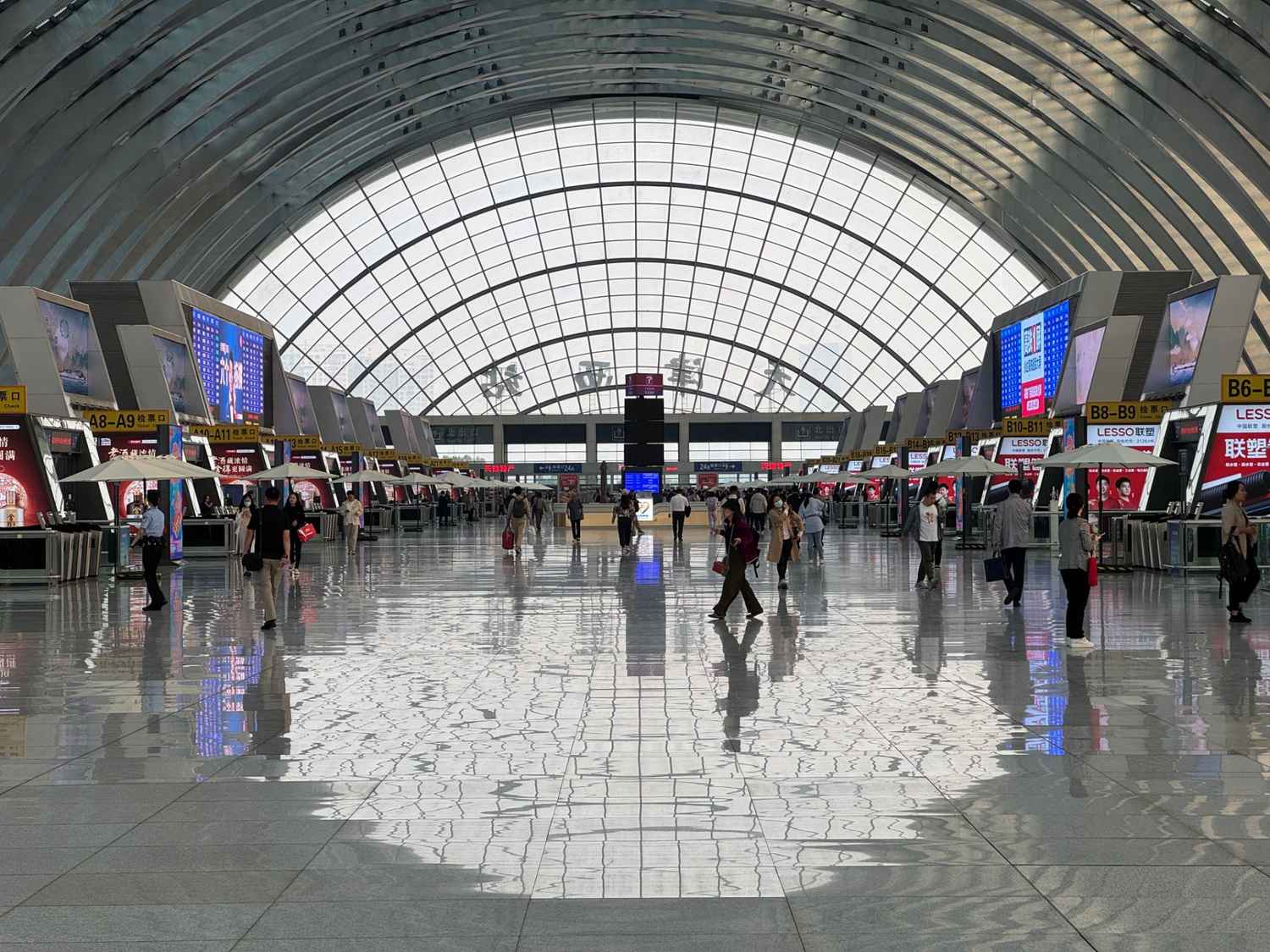
Every year, a handful of airports absorb a wildly disproportionate share of global air traffic. Just ten hubs handle roughly 9% of every passenger who boards a commercial flight anywhere on Earth. If you’ve ever stood in a security line that seemed to stretch for a mile, there’s a decent chance you were standing in one of them.
Ranking the busiest airports in the world isn’t as simple as it sounds, though. Depending on whether you count total passengers, international travelers, aircraft movements, or cargo tonnage, the list changes completely. This guide breaks down the current rankings, explains why the numbers shift from month to month, and shows what’s actually driving growth at the hubs climbing fastest.
Quick Answer
Hartsfield-Jackson Atlanta International Airport is the busiest airport in the world by total passenger traffic, handling over 106 million passengers in 2025, followed by Dubai International and Tokyo Haneda. By total flight movements, Chicago O’Hare currently holds the top spot instead.
How Airport Rankings Actually Work
Before comparing numbers, it helps to know what’s being measured, because “busiest” means different things depending on the source.
- Total passenger traffic counts every enplaned and deplaned passenger over a calendar year. This is the most commonly cited measure and the one Airports Council International (ACI) World publishes annually.
- Aircraft movements count takeoffs and landings, regardless of how many seats were filled. A hub built around regional jets can rank high here even with modest passenger totals.
- Scheduled capacity looks at available seats booked for a given month, which lets analysts estimate near-term traffic before final passenger counts are published.
- International passenger traffic isolates travelers crossing borders, producing a very different leaderboard than total traffic, since some giant hubs are overwhelmingly domestic.
Mixing these up is the single biggest reason two “busiest airport” lists can disagree. A hub can be first by one measure and fifth by another, and both rankings are correct.
The World’s Ten Busiest Airports by Passenger Traffic
Based on ACI World’s 2025 calendar-year figures, the busiest airports by total passenger traffic are tightly bunched behind Atlanta, with fewer than 3.3 million passengers separating fourth place from tenth.
| Rank | Airport | Code | 2025 Passengers (approx.) |
|---|---|---|---|
| 1 | Hartsfield-Jackson Atlanta | ATL | 106.3 million |
| 2 | Dubai International | DXB | 95.2 million |
| 3 | Tokyo Haneda | HND | 91.7 million |
| 4 | Dallas Fort Worth | DFW | 85.7 million |
| 5 | Shanghai Pudong | PVG | 85.0 million |
| 6 | Chicago O’Hare | ORD | 84.8 million |
| 7 | London Heathrow | LHR | 84.5 million |
| 8 | Istanbul Airport | IST | 84.4 million |
| 9 | Guangzhou Baiyun | CAN | 83.6 million |
| 10 | Denver International | DEN | 82.4 million |
Four of the top ten are American airports, which reflects the sheer scale of U.S. domestic flying rather than international dominance — most of these hubs carry 80–95% domestic passengers.
Why Atlanta Keeps Winning the Passenger Traffic Crown
Atlanta has held the top spot in nearly every year since 1998, and its advantage isn’t really about size. It’s about geography and connections. ATL sits within a short flight of most of the U.S. population, and Delta uses it as a connecting hub for an enormous share of its network. That combination of central location and hub concentration keeps volumes high year after year, even as other airports post faster percentage growth.
Dubai and Tokyo Haneda’s Climb in the Rankings
Dubai’s position at second place is driven almost entirely by international connectivity — it sits at the crossroads of Europe, Asia, and Africa, and functions as a transfer point rather than a final destination for a huge share of its traffic. Tokyo Haneda’s move into third reflects a steady expansion of international routes, a shift for an airport that spent decades focused mainly on domestic Japanese flights.
Ranked by Flights Instead of Passengers: A Different Picture
Switch the metric from passengers to total flight movements, and the leaderboard reorders itself. Chicago O’Hare currently leads global rankings with more than 82,000 two-way flights in a single month, averaging over 2,600 daily operations, largely on the strength of United’s regional and domestic network.
Atlanta ranks second by this measure, not first, despite topping the passenger list. The reason: Atlanta relies more heavily on larger aircraft with fewer, fuller flights, while O’Hare runs a higher volume of smaller regional jet operations. Dallas, Fort Worth, and Denver round out the top of the flight-movement rankings, all powered by dense domestic hub-and-spoke schedules.
This is a useful reminder that “busiest” by flights and “busiest” by people are answering two different questions.
What’s Driving Growth at Asia’s Fastest-Climbing Hubs
Some of the sharpest movement in the rankings isn’t happening in the traditional giants — it’s happening in Asia. Shanghai Pudong posted one of the biggest jumps in the current top ten, and Guangzhou Baiyun climbed from outside the top 50 just a few years ago into the top ten worldwide. That growth tracks closely with the recovery of international travel, easing of visa restrictions, and expanded route networks out of southern China.
India is showing similar momentum. Delhi’s airport has climbed rapidly in flight-movement rankings, powered largely by the expansion of low-cost domestic carriers rather than international long-haul growth. Analysts expect this pattern — rapid domestic-first growth followed by international expansion — to continue reshaping the rankings over the next several years as emerging aviation markets mature.
Busiest International Airports vs. Busiest Domestic Hubs
Total traffic and international traffic tell noticeably different stories. Dubai leads the international passenger rankings outright, with London Heathrow and Seoul Incheon close behind. That’s a very different top three than the total-traffic list, where U.S. domestic giants dominate.
The distinction matters for travelers, too. An airport that ranks in the global top ten overall, like Atlanta or Dallas-Fort Worth, can still feel relatively manageable for an international arrival, simply because the bulk of its congestion comes from domestic connections rather than customs and international transfers.
What These Numbers Actually Mean for Travelers
Ranking position alone won’t tell you what to expect at the gate. A few practical takeaways:
- Passenger volume doesn’t equal congestion at your specific gate. Airports the size of Atlanta or Dubai are built with that volume in mind, often with more efficient layouts than mid-sized airports handling a fraction of the traffic.
- Connection risk is higher at flight-movement leaders. Airports like O’Hare, built around frequent regional jet turnarounds, can be more exposed to weather delays cascading across the schedule.
- International hubs concentrate certain pain points. Heavy international traffic at places like Heathrow or Dubai tends to mean longer immigration and customs queues rather than longer domestic security lines.
- Rankings shift, but slowly. Aside from occasional disruptions, the top ten rarely reshuffles dramatically within a single year — the movement tends to play out over several years, as seen with Guangzhou’s rise.
Frequently Asked Questions
What is the busiest airport in the world in 2026? Hartsfield-Jackson Atlanta International Airport remains the busiest airport in the world by total passenger traffic, a position it has held nearly every year since 1998.
Which airport has the most flights, not just passengers? Chicago O’Hare currently leads global rankings by total flight movements, ahead of Atlanta and Dallas-Fort Worth.
Is Dubai busier than Atlanta? Dubai ranks second globally by total passenger traffic, but it’s the busiest airport in the world for international passengers specifically, since Atlanta’s traffic is overwhelmingly domestic.
Why do different sources rank airports differently? Sources measure different things — total passengers, international passengers only, flight movements, or scheduled seat capacity — and each method produces a different order.
Which airports are growing fastest right now? Shanghai Pudong and Guangzhou Baiyun in China, along with Delhi in India, have posted some of the fastest climbs in recent rankings, driven by international recovery and low-cost carrier expansion.
Are U.S. airports still dominant globally? Yes. The United States has more airports in the global top 50 by passenger traffic than any other country, largely due to the size and density of its domestic route network.
How is airport traffic data collected? Rankings are typically based on data reported by airport operators and aggregated by organizations like Airports Council International (ACI) World, or by aviation analytics firms tracking scheduled and actual flight operations.
Does a high ranking mean an airport is well-run? Not necessarily. Passenger and flight volume measure throughput, not punctuality, wait times, or passenger satisfaction; an airport can rank highly on traffic while scoring poorly on traveler experience, or vice versa.
Final Thoughts
The busiest airports in the world aren’t just the biggest; they’re the ones sitting at the intersection of geography, hub strategy, and travel demand. Atlanta’s dominance in total passengers, Dubai’s lead in international traffic, and O’Hare’s edge in flight movements all tell a slightly different story about how global aviation actually works. Understanding which ranking you’re looking at, and why it exists, makes it much easier to interpret the next “world’s busiest airport” headline you come across, and to plan smarter if your next trip routes through one of them.
