
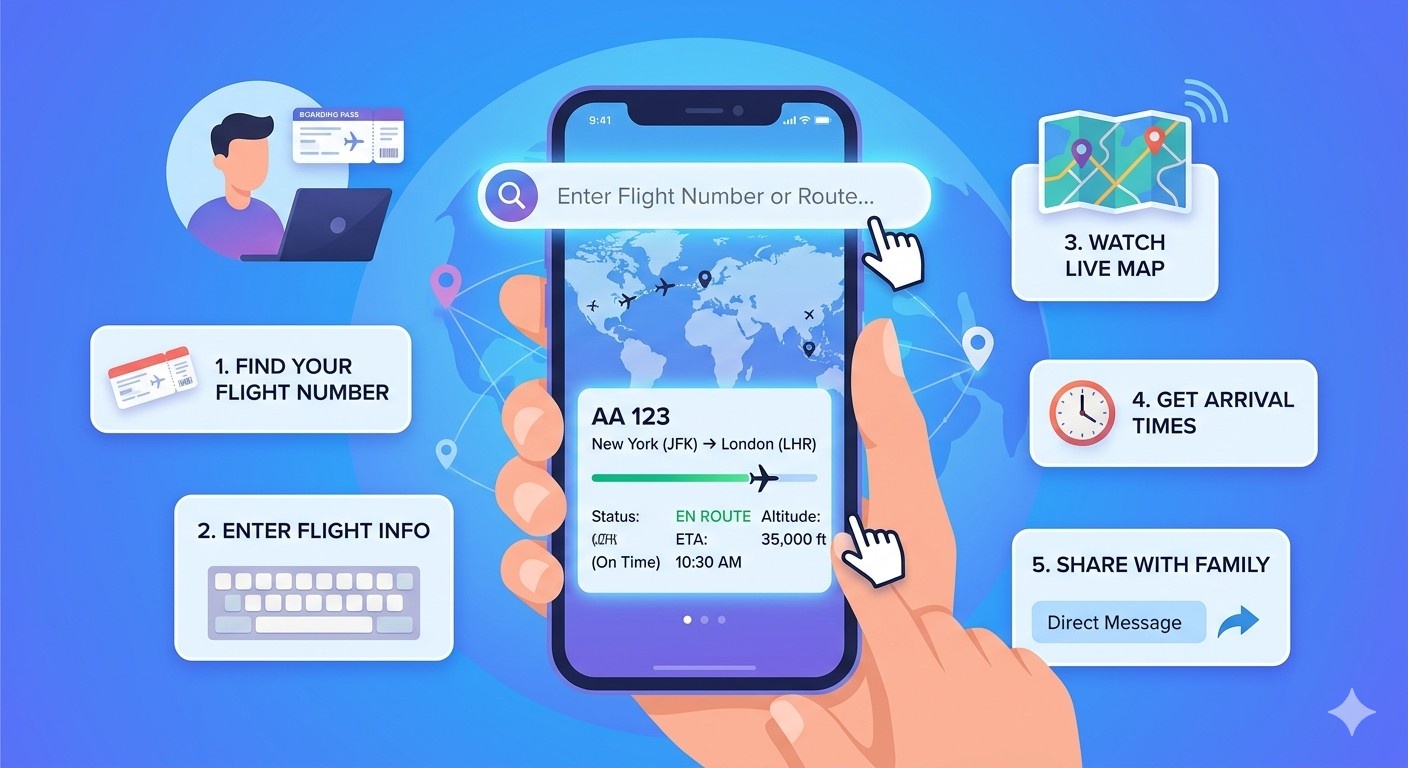
Flight delays, gate changes, and last-minute cancellations are more common than ever. That’s why millions of travelers now rely on flight trackers to stay updated in real time.
If you’ve ever wondered how to use a flight tracker, this guide will walk you through everything step by step. You’ll learn how flight tracking works, how to track any plane live, and which apps give the most accurate updates in 2026.
Whether you’re traveling internationally, picking someone up from the airport, or simply watching planes in the sky, flight trackers make travel planning much easier.
What Is a Flight Tracker?
A flight tracker is a website or app that shows live aircraft locations and flight status updates in real time.
Most flight tracking tools display:
- Current aircraft position
- Departure and arrival times
- Delays and cancellations
- Gate and terminal information
- Flight path and altitude
- Aircraft speed and type
- Weather conditions along the route
Modern flight trackers collect data from ADS-B receivers, satellites, airports, and airlines. Platforms like Flightradar24 and FlightAware now track hundreds of thousands of flights daily.
How Does a Flight Tracker Work?
Before learning how to use a flight tracker, it helps to understand the basics.
ADS-B Technology Explained
Most commercial aircraft use a system called ADS-B (Automatic Dependent Surveillance–Broadcast). The aircraft continuously broadcasts:
- GPS location
- Altitude
- Speed
- Direction
- Flight number
Ground receivers and satellites collect this information and send it to flight tracking platforms.
Real-Time Data Sources
Flight trackers combine data from:
- Airline schedules
- Air traffic control systems
- Satellite feeds
- Airport databases
- Weather systems
This allows users to see near-real-time aircraft movement on interactive maps.
How to Use a Flight Tracker Step by Step
Here’s the easiest way to track any flight in real time.
Step 1: Choose a Flight Tracking App or Website
Popular flight trackers in 2026 include:
- Flightradar24
- FlightAware
- Flighty
- Plane Finder
- FlightRadar alternatives with AI features
Flightradar24 remains one of the most widely used platforms because of its live map, aircraft details, and global coverage.
Best Flight Tracker Features to Look For
Choose a tracker with:
- Real-time updates
- Delay alerts
- Gate notifications
- Historical flight playback
- Weather overlays
- Mobile notifications
- Airport arrival/departure boards
Some newer apps also include AI-powered delay prediction tools in 2026.
Step 2: Search by Flight Number
The fastest way to use a flight tracker is by entering the flight number.
For example:
- Emirates EK202
- American Airlines AA100
- Qatar Airways QR719
After searching, the tracker usually shows:
- Scheduled departure
- Actual departure
- Estimated arrival
- Aircraft model
- Current position
- Delay information
Why Flight Numbers Matter
Flight numbers are unique identifiers. Searching by airport or airline can show dozens of results, while a flight number gives the exact flight instantly.
Step 3: Track the Plane Live on the Map
Most modern flight trackers display aircraft on a live world map.
You can:
- Zoom into airports
- Watch the plane move in real time
- View the flight route
- See altitude and speed updates
Some apps even offer 3D cockpit views and augmented reality features.
Understanding Flight Tracker Symbols
Different symbols show aircraft status:
- Green aircraft = active flight
- Yellow/orange = delayed
- Red = major delay or issue
- Gray = landed or inactive
Map layers may also show:
- Storm systems
- Turbulence
- Airport congestion
- Wind patterns
Step 4: Set Up Flight Alerts
One of the smartest ways to use a flight tracker is to enable notifications.
Most apps can alert you about:
- Boarding time
- Gate changes
- Delays
- Diversions
- Flight cancellations
- Early arrivals
This is especially useful for:
- Airport pickups
- Tight layovers
- Business travel
- International flights
Frequent travelers on Reddit often recommend enabling push alerts to avoid surprise delays.
Step 5: Check Airport and Weather Conditions
Flight tracking apps are no longer just about maps.
You can also view:
- Airport delay statistics
- Runway congestion
- Weather disruptions
- Connecting flight risks
FlightAware’s “Misery Map” became popular for showing airport-wide delay patterns.
Why Weather Matters
Bad weather remains one of the biggest causes of flight disruptions worldwide.
Modern trackers now integrate:
- Rain radar
- Wind forecasts
- Turbulence prediction
- Storm tracking
This helps travelers understand why flights are delayed.
Best Flight Tracker Apps in 2026
Here are the top options travelers use today.
Flightradar24
Best for aviation enthusiasts and visual tracking.
Key Features
- Live global flight map
- AR plane identification
- Historical playback
- Aircraft details and photos
- Weather overlays
It’s widely considered the industry standard for real-time aircraft tracking.
FlightAware
Best for flight status and airport delays.
Key Features
- Reliable delay data
- Airport congestion monitoring
- Flight history
- Detailed routing info
- Strong free version
Travelers often use FlightAware to predict delays before airlines announce them.
Flighty
Best for Apple users and smart travel alerts.
Key Features
- Delay prediction
- Live Activities support
- Gate change notifications
- Connection monitoring
Flighty is especially popular among frequent business travelers.
Plane Finder
Best for a clean interface and military aircraft tracking.
Key Features
- Easy-to-use map
- Helicopter tracking
- AR mode
- Minimal interface
Common Reasons Flights Disappear From Trackers
Sometimes aircraft vanish temporarily from maps.
This can happen because of:
- Remote ocean routes
- Polar flight paths
- Weak satellite coverage
- Military restrictions
- Signal interruptions
For example, Arctic routes can appear confusing on flat maps.
How Accurate Are Flight Trackers?
Most flight trackers are highly accurate, usually within seconds.
However, delays can occur due to:
- Satellite lag
- Airline reporting delays
- Weather interference
- Restricted airspace
Commercial flights are usually easier to track than private jets or military aircraft.
Advanced Tips for Using a Flight Tracker
Here’s how experienced travelers use flight trackers more effectively.
Track the Incoming Aircraft
Many delays start earlier in the day.
You can track the aircraft scheduled for your flight before boarding begins.
If your plane is arriving late from another city, you’ll know about delays earlier than airport announcements.
Experienced travelers regularly use this strategy to avoid missed connections.
Use Historical Playback
Some apps allow playback of previous flights.
This helps you:
- Analyze frequent delays
- Study common routes
- Monitor airport traffic patterns
Plane spotters and aviation fans especially love this feature.
Save Favorite Flights and Airports
Frequent travelers often save:
- Home airports
- Favorite airlines
- Family routes
- Business travel paths
This speeds up future tracking.
Benefits of Using a Flight Tracker
Learning how to use a flight tracker can save time, reduce stress, and improve travel planning.
Main Benefits
- Avoid unnecessary airport waiting
- Get real-time delay updates
- Monitor connecting flights
- Check gate changes instantly
- Follow flights worldwide
- Improve airport pickups
Flight trackers are now useful for both casual travelers and aviation enthusiasts.
FAQs About How to Use a Flight Tracker
Can I track a flight for free?
Yes. Most flight tracking websites and apps offer free plans with live tracking and basic flight details.
What is the best free flight tracker?
Flightradar24 and FlightAware are the most popular free options in 2026.
Can flight trackers predict delays?
Some advanced apps now use AI and weather systems to predict delays before airlines announce them.
Why is a plane not showing on the map?
Coverage gaps, military restrictions, or remote flight paths can temporarily hide aircraft.
Can I track private jets?
Sometimes. Visibility depends on privacy settings and regional regulations.
Are flight trackers accurate internationally?
Yes. Most major trackers now use satellite-based coverage for global tracking.
Conclusion
Knowing how to use a flight tracker gives you more control over your travel experience.
Instead of waiting for airport announcements, you can monitor flights in real time, predict delays early, and stay informed from takeoff to landing.
For most travelers, a simple combination of live tracking, notifications, and weather alerts is enough to avoid travel headaches. And if you’re an aviation enthusiast, modern flight trackers offer an incredible look into global air traffic.
Start with a free tracker like Flightradar24 or FlightAware, enter a flight number, and explore the live map yourself. Once you use a flight tracker properly, flying becomes far less stressful.
