
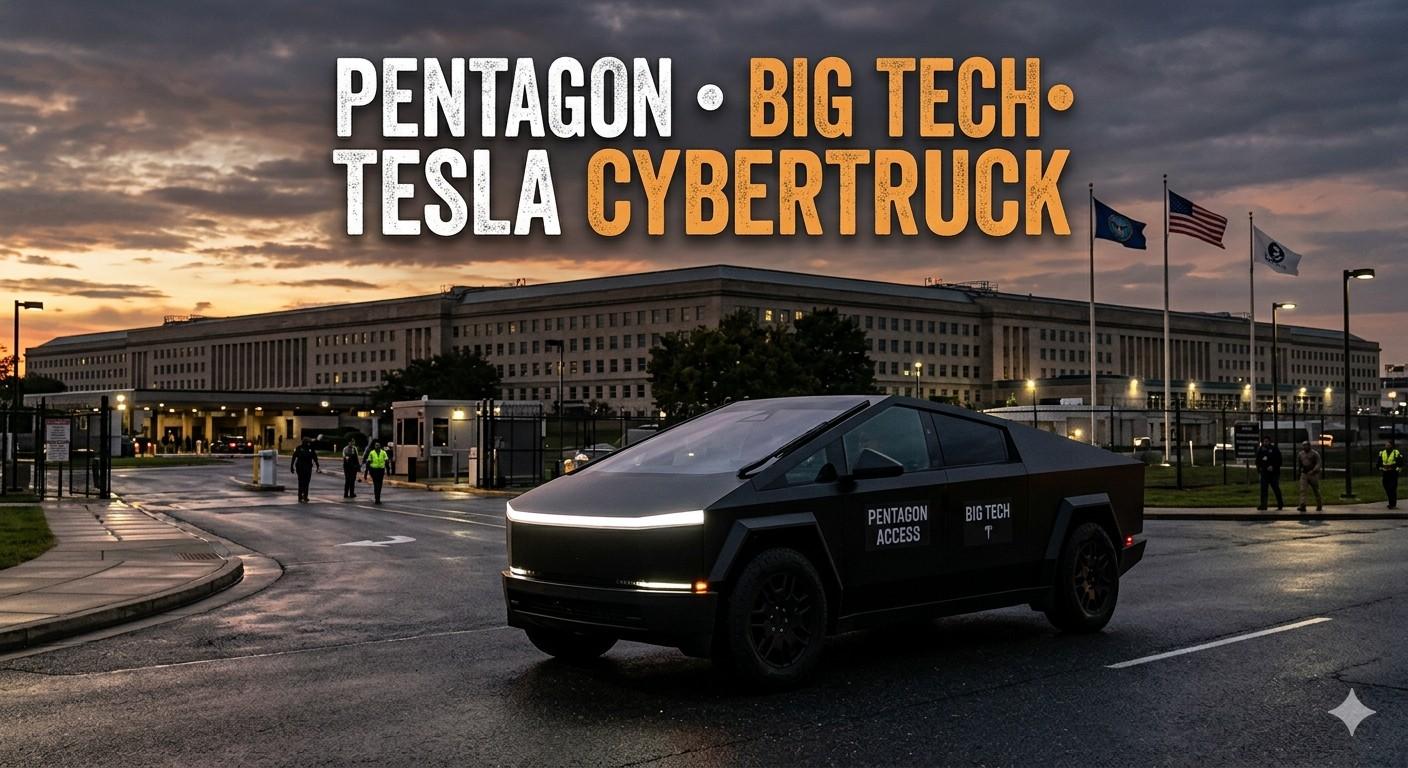
The relationship between the Pentagon and Tesla Cybertruck conversation has become one of the most discussed topics in technology, defense, and transportation circles. As governments increasingly rely on advanced software, artificial intelligence, autonomous systems, and electric vehicles, companies traditionally focused on commercial markets are finding themselves connected to national security initiatives.
The Tesla Cybertruck, with its futuristic design, durable construction, and electric powertrain, has sparked discussions about whether next-generation commercial vehicles could influence military mobility. At the same time, major technology firms continue to deepen their involvement in defense-related projects, creating a new era where innovation from the private sector directly impacts national security.
This article explores how the Pentagon, big tech companies, and Tesla Cybertruck technologies intersect, why the topic matters, and what it could mean for the future of defense operations worldwide.
Understanding the Pentagon Big Tech Tesla Cybertruck Connection
The phrase Pentagon big tech Tesla Cybertruck reflects a broader trend rather than a single program. It highlights the growing collaboration between defense organizations and technology companies that develop cutting-edge solutions.
For decades, defense innovation largely came from specialized military contractors. Today, many of the most advanced technologies originate in the private sector, including:
- Artificial intelligence
- Cloud computing
- Satellite communications
- Autonomous driving systems
- Electric vehicle technology
- Cybersecurity platforms
- Advanced manufacturing
As these technologies become critical to modern warfare and logistics, the Pentagon increasingly evaluates commercial innovations that could be adapted for military use.
Why the Pentagon Is Working More Closely With Big Tech
Modern military operations rely heavily on data, connectivity, and automation. Traditional defense systems alone can no longer meet every technological requirement.
The Rise of Digital Warfare
Military competition is no longer limited to tanks, aircraft, and ships. Today’s battlefield includes:
- Cyber operations
- AI-assisted decision-making
- Space-based communications
- Autonomous systems
- Real-time intelligence networks
Big tech companies often lead innovation in these areas, making them valuable partners for defense organizations.
Faster Innovation Cycles
Technology firms can often develop and deploy software updates much faster than traditional defense procurement processes.
Benefits include:
- Rapid prototyping
- Continuous software improvements
- Lower development costs
- Access to commercial-scale innovation
This speed is particularly important as global threats evolve more quickly than ever.
Tesla Cybertruck and Military Interest
The Tesla Cybertruck has generated significant attention because its design shares some characteristics that align with military durability requirements.
What Makes the Cybertruck Different?
Several features stand out:
- Stainless-steel exterior construction
- High torque electric motors
- Off-road capability
- Advanced onboard computing systems
- Large battery capacity
- Potential for software-based upgrades
While the Cybertruck was designed for consumers, some observers have suggested that elements of its engineering could inspire future military vehicle designs.
Durability and Protection
One reason the Cybertruck frequently appears in defense discussions is its exoskeleton design.
Potential advantages include:
- Improved structural strength
- Reduced maintenance requirements
- Resistance to dents and corrosion
- Long-term durability in challenging environments
Military organizations continuously seek vehicles capable of operating under harsh conditions, making such innovations worth examining.
Could Electric Military Vehicles Become Common?
The Pentagon and military organizations worldwide are exploring electrification for several strategic reasons.
Fuel Logistics Challenges
Fuel supply lines are often vulnerable during military operations.
Electric vehicles could potentially offer:
- Reduced fuel dependency
- Lower operating costs
- Quiet operation
- Simplified maintenance
These advantages make electric transportation an area of growing interest.
Silent Mobility
Electric powertrains produce less noise than traditional internal combustion engines.
Potential tactical benefits include:
- Reduced acoustic detection
- Improved stealth operations
- Enhanced reconnaissance capabilities
While large-scale military adoption remains complex, the technology continues to advance rapidly.
How Big Tech Is Influencing Defense Strategy
The Pentagon’s big tech Tesla Cybertruck discussion is also part of a larger shift toward technology-driven defense systems.
Artificial Intelligence Integration
AI is transforming nearly every aspect of military planning.
Applications include:
- Threat detection
- Intelligence analysis
- Autonomous systems
- Logistics optimization
- Predictive maintenance
Big tech companies possess substantial expertise in machine learning and large-scale data processing, making them important contributors.
Cloud Computing and Data Management
Modern military operations generate enormous amounts of data.
Cloud platforms help:
- Store intelligence securely
- Enable global collaboration
- Improve battlefield awareness
- Accelerate decision-making
The ability to process information quickly can provide a significant operational advantage.
The Strategic Importance of Autonomous Technology
Autonomous systems are becoming a major focus for defense organizations.
Self-Driving Technologies
Tesla is one of the most recognized companies in autonomous driving development.
Although military requirements differ from civilian transportation, some underlying technologies overlap:
- Sensor fusion
- Computer vision
- Navigation systems
- Obstacle avoidance
- Real-time decision-making
Future military vehicles may incorporate similar capabilities adapted for defense environments.
Unmanned Ground Vehicles
Many countries are already testing autonomous military vehicles for:
- Supply transport
- Surveillance missions
- Hazardous operations
- Remote reconnaissance
These systems can reduce risks to personnel while improving operational flexibility.
Cybersecurity Challenges in Defense Technology
As military systems become more connected, cybersecurity becomes increasingly important.
Why Cybersecurity Matters
Connected vehicles and digital platforms create new opportunities but also new risks.
Potential threats include:
- Data breaches
- Communication disruptions
- Malware attacks
- System interference
- Infrastructure targeting
The Pentagon invests heavily in cybersecurity to protect critical systems.
Big Tech’s Role in Security
Technology companies contribute expertise in:
- Threat detection
- Encryption
- Secure cloud environments
- AI-powered security monitoring
- Network resilience
These capabilities support both civilian and military security objectives.
Pentagon Modernization Efforts and Commercial Innovation
Defense agencies increasingly recognize that innovation often happens outside traditional military suppliers.
Public-Private Partnerships
Collaboration between government and industry can accelerate innovation.
Advantages include:
- Access to emerging technologies
- Reduced development timelines
- Shared expertise
- Greater flexibility
Many defense modernization programs now include commercial technology providers.
Lessons From Commercial Markets
Consumer technology markets move rapidly and encourage continuous improvement.
Military planners can benefit from:
- Proven commercial solutions
- Existing manufacturing capacity
- Scalable technologies
- Lower development risks
This approach helps bridge the gap between innovation and deployment.
The Future of Electric Tactical Vehicles
The future of military mobility may involve a combination of traditional and electric platforms.
Potential Benefits
Electric tactical vehicles could provide:
- Lower fuel consumption
- Reduced thermal signatures
- Enhanced mobility
- Greater energy efficiency
- Flexible power generation capabilities
Current Limitations
Despite the advantages, several challenges remain:
- Battery weight
- Charging infrastructure
- Extreme weather performance
- Operational range
- Battlefield reliability
These factors must be addressed before widespread adoption occurs.
How the Tesla Cybertruck Symbolizes a Broader Trend
The Tesla Cybertruck often attracts attention because it represents a shift in how people think about transportation technology.
The vehicle demonstrates several broader trends:
- Advanced materials engineering
- Software-defined vehicles
- Electric propulsion
- Integrated AI systems
- Continuous software updates
These same trends are influencing military vehicle development around the world.
The significance lies less in the Cybertruck itself and more in what it represents: the growing convergence of commercial innovation and defense technology.
What This Means for Global Defense Competition
Countries increasingly view technological superiority as a national security priority.
Key Areas of Competition
Governments are investing heavily in:
- Artificial intelligence
- Autonomous systems
- Quantum computing
- Space technology
- Cybersecurity
- Advanced manufacturing
- Electric mobility
The Pentagon’s engagement with technology companies reflects the importance of maintaining an innovation advantage.
The Role of Private Industry
Private-sector innovation is likely to remain a driving force behind future defense capabilities.
Organizations that successfully combine:
- Engineering excellence
- Software expertise
- Manufacturing scale
- Research capabilities
will continue to shape the next generation of military systems.
FAQs
What does the Pentagon’s big tech Tesla Cybertruck mean?
The phrase refers to discussions surrounding the Pentagon’s interest in emerging technologies from major technology companies and how innovations such as the Tesla Cybertruck may influence future military vehicle concepts.
Is the Tesla Cybertruck being used by the military?
The Cybertruck was designed as a commercial vehicle. However, its design, materials, and electric technology have sparked discussions about potential defense-related applications and future military vehicle concepts.
Why is the Pentagon interested in big tech companies?
Big tech companies lead innovation in areas such as artificial intelligence, cloud computing, cybersecurity, autonomous systems, and advanced software, all of which are increasingly important to national security.
Could electric vehicles replace military trucks?
Electric vehicles may play a larger role in military logistics and support operations, but challenges such as charging infrastructure, battery performance, and operational range still need to be addressed.
How does AI impact military operations?
AI helps improve intelligence analysis, logistics planning, threat detection, autonomous systems, and decision-making speed, making it one of the most important technologies in modern defense strategy.
What role does cybersecurity play in military technology?
Cybersecurity protects military networks, communications, vehicles, and data systems from cyber threats that could disrupt operations or compromise sensitive information.
Conclusion
The Pentagon’s big tech Tesla Cybertruck discussion reflects a much larger transformation occurring across the defense and technology sectors. As artificial intelligence, autonomous systems, cybersecurity, cloud computing, and electric vehicles become increasingly important, the line between commercial innovation and military capability continues to blur.
While the Tesla Cybertruck itself may not define the future of military transportation, the technologies and engineering principles behind it highlight where defense innovation is heading. The Pentagon’s growing engagement with technology companies demonstrates that future security challenges will be shaped not only by traditional military hardware but also by software, data, automation, and advanced mobility solutions.
For anyone following the future of defense technology, the intersection of the Pentagon, big tech, and emerging vehicle platforms offers valuable insight into how military capabilities may evolve over the coming decade.
