
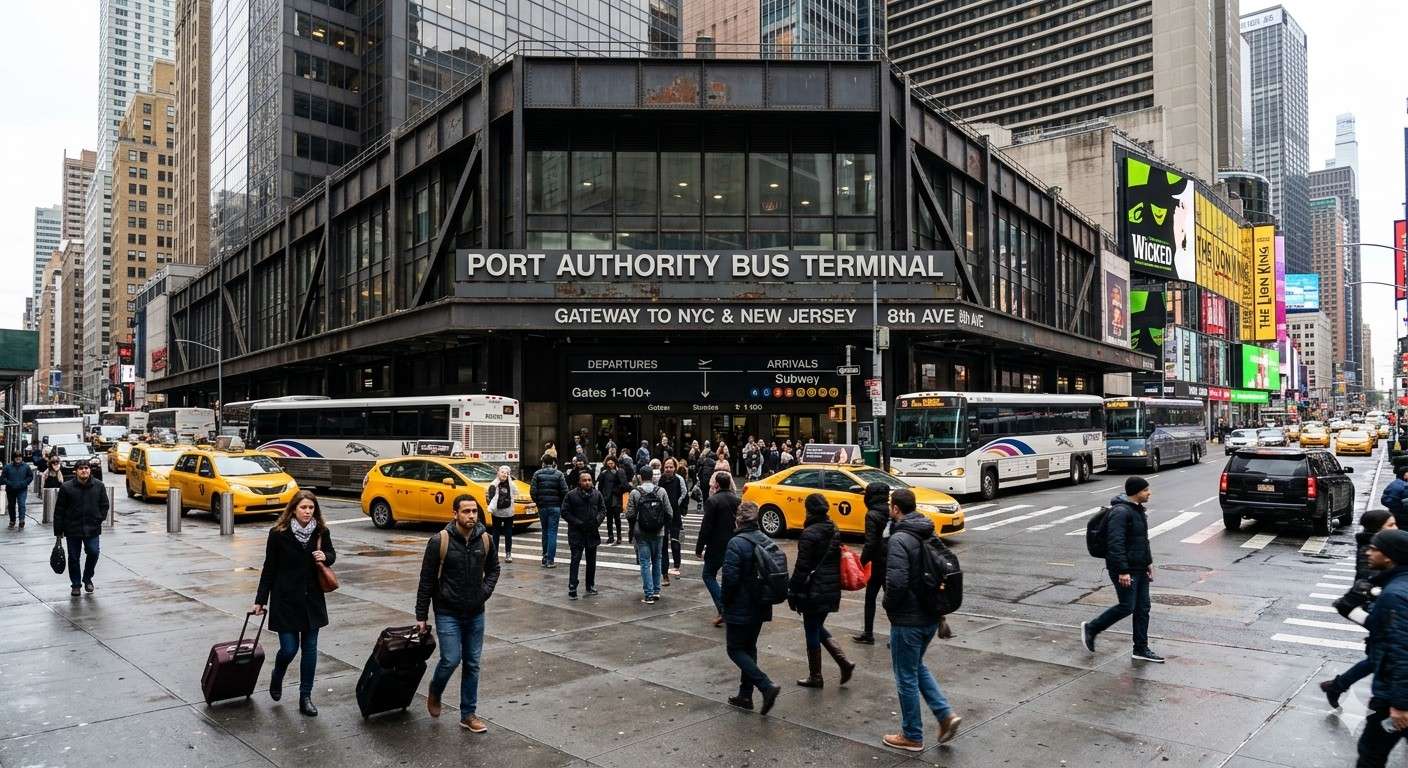
Every day, hundreds of thousands of commuters, tourists, and long-distance travelers pass through one building in Midtown Manhattan, the Port Authority Bus Terminal. Whether you’re catching a bus to New Jersey, heading to another state, or navigating New York City for the first time, understanding how this transportation hub works can save time and reduce stress.
The challenge for many travelers is that the terminal is massive, busy, and constantly evolving. With ongoing redevelopment plans, changing gate assignments, and multiple transit connections, it can feel overwhelming.
In this guide, you’ll learn how the Port Authority Bus Terminal operates, its history, major services, facilities, future expansion plans, and practical tips for making your journey smoother.
Featured Snippet
The Port Authority Bus Terminal (PABT) is the largest and busiest bus terminal in the United States and among the busiest in the world. Located in Midtown Manhattan near Times Square, it serves commuters, regional travelers, and long-distance bus passengers while connecting directly to New York City’s subway system and major transportation networks.


Why the Port Authority Bus Terminal Matters More Than Ever
Many transportation hubs move large numbers of people, but few have the regional importance of the Port Authority Bus Terminal.
Located between 40th and 42nd Streets and Eighth and Ninth Avenues in Manhattan, the terminal serves as a critical link between New York City and surrounding regions. It connects commuters from:
- New Jersey
- Eastern Pennsylvania
- Hudson Valley
- Upstate New York
- New England
- Mid-Atlantic destinations
- Canada-bound services
The facility handles more than 200,000 passenger trips on an average weekday and remains a central part of the New York metropolitan transportation system.
Understanding the Terminal at a Glance
| Feature | Details |
|---|---|
| Location | Midtown Manhattan, New York City |
| Opened | 1950 |
| Operator | Port Authority of New York and New Jersey |
| Primary Users | Commuters, tourists, intercity travelers |
| Connected Transit | NYC Subway, local buses, taxis, rideshare |
| Major Carrier | NJ Transit |
| Status | Active with major redevelopment underway |
Sources confirm the terminal opened in 1950 and remains the nation’s largest bus terminal.
From 1950 to Today: How the Terminal Evolved
The story of the Port Authority Bus Terminal begins with a simple goal: reduce traffic congestion in Manhattan.
Before the terminal existed, several smaller bus stations operated independently throughout Midtown. The Port Authority consolidated them into a single facility that opened in December 1950.
Major Milestones
| Year | Development |
|---|---|
| 1950 | Original terminal opens |
| 1963 | Expansion increases capacity |
| 1970 | Exclusive Bus Lane (XBL) introduced |
| 1981 | North Wing expansion completed |
| 2025+ | Major redevelopment begins |
As commuter demand grew, multiple expansions were required. Today, the terminal occupies approximately 1.9 million square feet and remains one of the most heavily used transportation facilities worldwide.


What Travelers Can Expect Inside
The Port Authority Bus Terminal functions like a small city.
Inside, visitors will find:
Ticketing Areas
Many operators provide:
- Ticket counters
- Self-service kiosks
- Mobile ticket support
Waiting Areas
Passengers can access:
- Indoor seating
- Information displays
- Departure boards
- Charging stations
Food and Retail
Travelers can typically find:
- Coffee shops
- Quick-service restaurants
- Convenience stores
- Newsstands
Accessibility Features
The facility offers:
- Elevators
- Escalators
- Accessible restrooms
- ADA-compliant pathways
Key Bus Operators Serving the Terminal
NJ Transit
NJ Transit is the largest carrier operating from the terminal and serves commuters traveling between New York and New Jersey.
Intercity Bus Companies
The terminal also accommodates numerous long-distance operators offering service to destinations across the Northeast and beyond.
Common routes include:
- Boston
- Philadelphia
- Washington, D.C.
- Albany
- Buffalo
- Atlantic City
Availability varies by carrier and season.
How the Terminal Connects to New York City
One reason the Port Authority Bus Terminal remains so important is its location.
Travelers can quickly reach:
Times Square
Just a short walk from the terminal.
Broadway
Theater District attractions are nearby.
Subway Connections
Passengers can access multiple subway lines through nearby stations, making it easy to continue journeys throughout New York City.
Airports
Travelers can connect to airport services for:
- JFK
- LaGuardia
- Newark Liberty
Common Challenges Travelers Face
Despite its importance, the terminal has long faced operational challenges.
Aging Infrastructure
The current facility is more than 75 years old and struggles to meet modern transportation demands.
Congestion
Peak commuting hours can create:
- Crowded waiting areas
- Gate changes
- Long lines
- Navigation difficulties
Wayfinding Issues
Many first-time visitors report confusion when locating:
- Gates
- Boarding areas
- Connections
These challenges are among the reasons a major redevelopment project was approved.


The $10 Billion Redevelopment Project
One of the most significant transportation infrastructure projects in North America is currently underway at the Port Authority Bus Terminal.
The replacement project aims to modernize the facility and accommodate future passenger growth through the 2040–2050 period.
Planned Improvements
The new terminal is expected to include:
- More than 180 bus gates
- Improved passenger circulation
- Enhanced accessibility
- Modern retail spaces
- Better connections to transit
- Expanded bus storage facilities
- New Lincoln Tunnel access ramps
Officials describe the project as a complete transformation of the commuter experience.
Why the Redevelopment Matters
Benefits include:
| Improvement | Expected Impact |
|---|---|
| Additional capacity | Reduced crowding |
| Modern infrastructure | Better reliability |
| Improved accessibility | Easier navigation |
| New staging areas | Less street congestion |
| Updated facilities | Better passenger experience |
Construction milestones have already begun, with phased implementation designed to keep bus service operating during redevelopment.
Practical Tips for First-Time Visitors
Arrive Early
Give yourself extra time, especially during rush hour.
Verify Gate Numbers
Gate assignments may change.
Use Mobile Tickets
Many operators support digital boarding passes.
Travel Light
Navigating busy terminals becomes easier with fewer bags.
Follow Real-Time Displays
Departure boards provide the latest information.
Know Your Carrier
Different companies use different boarding areas.
Expert Insights: What Makes This Terminal Unique?
Transportation planners often point to three factors that distinguish the Port Authority Bus Terminal:
- Scale – Few bus facilities globally handle comparable passenger volumes.
- Regional Importance – It serves as a gateway between New York City and neighboring states.
- Redevelopment Scope – The ongoing modernization project is among the largest transit infrastructure investments in the United States.
For commuters, the terminal is not merely a building—it is a critical component of daily economic activity across the New York metropolitan region.
Frequently Asked Questions
1. Where is the Port Authority Bus Terminal located?
It is located in Midtown Manhattan between Eighth and Ninth Avenues near Times Square.
2. Why is the Port Authority Bus Terminal famous?
It is recognized as the largest bus terminal in the United States and one of the busiest in the world.
3. Which bus companies operate there?
NJ Transit is the largest operator, alongside numerous regional and intercity carriers.
4. Does the terminal connect to the subway?
Yes. Travelers can access multiple New York City subway lines from nearby stations.
5. Is the terminal being rebuilt?
Yes. A multibillion-dollar redevelopment project is underway to replace and modernize the existing facility.
6. When did the terminal open?
The original terminal opened in 1950.
7. How many passengers use it daily?
Average weekday passenger volumes exceed 200,000 trips.
8. What is the future of the Port Authority Bus Terminal?
The new facility is designed to meet future transportation demand while improving passenger comfort, accessibility, and operational efficiency.
Conclusion
The Port Authority Bus Terminal remains one of the most important transportation facilities in North America. For decades, it has connected millions of commuters and travelers to New York City while supporting regional mobility across multiple states.
Although the current facility faces challenges related to age and capacity, the ongoing redevelopment project promises a more efficient, accessible, and passenger-friendly future. Whether you’re a daily commuter or a first-time visitor, understanding how the Port Authority Bus Terminal operates can make your travel experience smoother and more predictable.
If you’re planning a trip through New York City, bookmark this guide and stay informed about the latest developments at the Port Authority Bus Terminal.
