
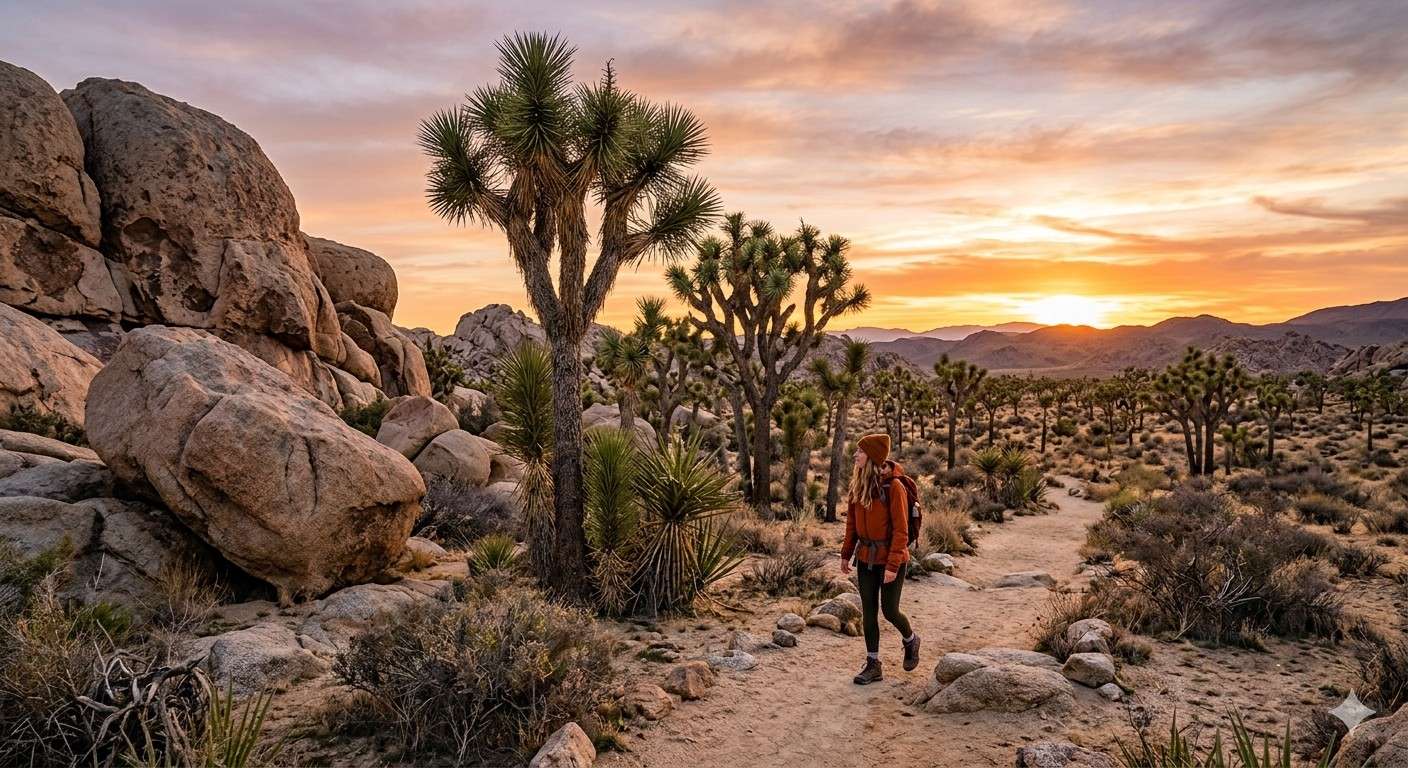
Joshua Tree National Park is one of the most unique landscapes in the United States. Located in Southern California, this desert park combines surreal rock formations, iconic Joshua trees, night skies, and unforgettable hiking trails.
Whether you are planning a weekend road trip, a camping adventure, or a one-day stop between Los Angeles and Phoenix, Joshua Tree National Park offers a mix of adventure and peaceful desert beauty that is hard to find anywhere else.
In this complete 2026 guide, you’ll learn:
- The best things to do in Joshua Tree National Park
- Top hikes and scenic spots
- Where to camp and stargaze
- The best time to visit
- Practical tips most first-time visitors miss
The goal is simple: help you experience the park like a seasoned traveler instead of making rookie mistakes.
Why Joshua Tree National Park Is So Special
Joshua Tree National Park sits where the Mojave Desert and Colorado Desert meet. This creates two distinct ecosystems with dramatically different landscapes and plant life.
The park is famous for:
- Twisted Joshua trees
- Massive granite boulders
- World-class rock climbing
- Incredible stargazing
- Desert wildflowers
- Scenic drives and photography
Unlike mountain national parks filled with forests and lakes, Joshua Tree feels almost otherworldly. Many visitors describe it as “walking on another planet.”
Best Time to Visit Joshua Tree National Park
Spring (March–May)
Spring is widely considered the best season to visit Joshua Tree National Park.
You’ll enjoy:
- Mild temperatures
- Blooming wildflowers
- Comfortable hiking weather
- Clear night skies
Daytime temperatures usually range between 70°F and 85°F.
Fall (October–November)
Fall is another excellent option because:
- Summer heat fades
- The crowds are smaller than in the spring
- Camping becomes comfortable again
Winter (December–February)
Winter days are cool and pleasant, but nights can drop below freezing. Snow occasionally appears at higher elevations.
Summer (June–September)
Summer is extremely hot. Temperatures often exceed 100°F. Hiking during midday can be dangerous.
If you visit in summer:
- Start hikes before sunrise
- Carry extra water
- Avoid strenuous afternoon activity
Best Things to Do in Joshua Tree National Park
Explore the Famous Hiking Trails
Joshua Tree National Park has around 300 miles of hiking trails.
Here are the top hikes for first-time visitors.
Hidden Valley Trail
This easy 1-mile loop is one of the best introductions to the park.
You’ll walk through:
- Giant boulders
- Joshua tree forests
- Natural rock walls
It’s perfect for families and beginner hikers.
Ryan Mountain Trail
Ryan Mountain offers one of the best panoramic views in Joshua Tree National Park.
Trail details:
- Moderate difficulty
- 3 miles round trip
- Excellent sunrise and sunset views
Barker Dam Trail
This trail combines:
- Desert scenery
- Historic ranching history
- Petroglyphs
- Seasonal water
It’s one of the most diverse short hikes in the park.
Arch Rock Nature Trail
This short trail leads to a stunning natural rock arch that becomes especially photogenic during sunset and at night.
Experience Stargazing in Joshua Tree National Park
Joshua Tree National Park is internationally known for its dark skies. The park is officially recognized as an International Dark Sky Park.
On clear nights, you can often see:
- The Milky Way
- Meteor showers
- Thousands of stars
- Lunar eclipses
Best Stargazing Spots
Keys View
A panoramic overlook ideal for sunset and night photography.
Cap Rock
Easy access and wide-open skies make this popular with beginners.
Cholla Cactus Garden
Photographers love this location because it is darker and quieter at night.
White Tank Campground
One of the best camping areas for astrophotography, thanks to lower light pollution.
Stargazing Tips
- Visit during a new moon
- Bring warm layers
- Use red flashlights instead of white lights
- Download offline maps before entering the park
Cell service is extremely limited in many areas.
Scenic Drives and Must-See Landmarks
Even if you do not hike much, Joshua Tree National Park still offers incredible scenery from the road.
Keys View
This overlook provides sweeping views of:
- Coachella Valley
- San Andreas Fault
- Palm Springs
- Mount San Jacinto
On clear days, visibility stretches over 100 miles.
Skull Rock
One of the park’s most famous rock formations, Skull Rock, resembles a giant skull shaped naturally by erosion.
It’s located directly beside the road, making it easy to access.
Cholla Cactus Garden
This dense cactus field glows beautifully during sunrise and sunset.
Many photographers consider it one of the park’s most photogenic spots.
Jumbo Rocks
A maze of giant boulders perfect for climbing, scrambling, and photography.
Camping in Joshua Tree National Park
Camping is one of the best ways to fully experience the desert.
Joshua Tree National Park has nine developed campgrounds.
Popular campgrounds include:
- Jumbo Rocks
- Hidden Valley
- White Tank
- Belle Campground
- Cottonwood Campground
Reservation Tips for 2026
Nearly 85% of campsites require reservations in advance.
Important tips:
- Book early during the spring
- Use Recreation.gov
- Weekend sites fill months ahead
- Arrive before dark if possible
Best Campgrounds by Travel Style
| Travel Style | Recommended Campground |
| Stargazing | White Tank |
| Families | Jumbo Rocks |
| Quiet Camping | Belle |
| Beginner Campers | Cottonwood |
| Rock Climbers | Hidden Valley |
Rock Climbing and Bouldering
Joshua Tree National Park is one of the top climbing destinations in the world.
The park includes:
- Around 8,000 climbing routes
- More than 2,000 bouldering problems
Best Climbing Areas
- Intersection Rock
- Echo Rock
- Hall of Horrors
- Hemingway Buttress
Even non-climbers enjoy watching experienced climbers tackle the granite walls.
Essential Tips for First-Time Visitors
Many travel guides skip the practical details that actually matter. Here are the biggest lessons experienced visitors share.
Bring More Water Than You Think
There is very little water available inside the park.
A good rule:
- Carry at least 1 gallon per person per day
Download Maps Before Arrival
Cell reception is unreliable across much of Joshua Tree National Park.
Offline maps can save you major frustration.
Avoid the West Entrance During Busy Times
The west entrance often experiences long traffic lines. Some experienced travelers recommend using the south entrance during peak periods.
Stay After Sunset
Many visitors leave before dark and miss the park’s best feature: the night sky.
Wear Layers
Desert temperatures change quickly. Warm afternoons can become freezing nights.
One-Day Joshua Tree National Park Itinerary
Short on time? Here’s an ideal one-day route.
Morning
- Enter through the west entrance
- Hike Hidden Valley Trail
- Explore Skull Rock
Afternoon
- Visit Keys View
- Walk through the Cholla Cactus Garden
- Picnic at Jumbo Rocks
Evening
- Sunset at Arch Rock
- Stargazing near Cap Rock or White Tank
This route gives you a strong mix of scenery, hiking, and photography in one day.
Wildlife and Nature in Joshua Tree National Park
Despite the harsh desert environment, the park supports diverse wildlife.
You may spot:
- Desert tortoises
- Coyotes
- Jackrabbits
- Roadrunners
- Bighorn sheep
Birdwatchers especially enjoy the spring migration season. The park has over 250 recorded bird species.
Always keep a safe distance from wildlife and never feed animals.
FAQs About Joshua Tree National Park
Is Joshua Tree National Park worth visiting?
Absolutely. Joshua Tree National Park offers unique desert landscapes, excellent hiking, world-class stargazing, and unforgettable photography opportunities.
How many days do you need in Joshua Tree National Park?
Most travelers need:
- 1 day for highlights
- 2–3 days for hiking and camping
- 4+ days for climbing and deeper exploration
What is the best month to visit Joshua Tree National Park?
March, April, October, and November usually offer the best weather.
Can you drive through Joshua Tree National Park?
Yes. Scenic roads connect the park’s major attractions, making it easy to explore by car.
Is Joshua Tree good for beginners?
Yes. Many trails are short and beginner-friendly, including Hidden Valley and Barker Dam.
Do you need reservations for Joshua Tree National Park?
Reservations are not required for park entry, but campground reservations are strongly recommended.
Conclusion
Joshua Tree National Park is more than just a desert destination. It’s a place where giant rock formations, surreal landscapes, and dark skies create an unforgettable outdoor experience.
Whether you want to hike scenic trails, sleep under the stars, photograph the Milky Way, or simply disconnect from city life, Joshua Tree delivers something special in every season.
The key to enjoying the park is preparation:
- Arrive early
- Carry plenty of water
- Stay after dark
- Slow down and explore beyond the main viewpoints
Once you experience a quiet desert sunset followed by a sky full of stars, you’ll understand why Joshua Tree National Park keeps drawing travelers back year after year.
