
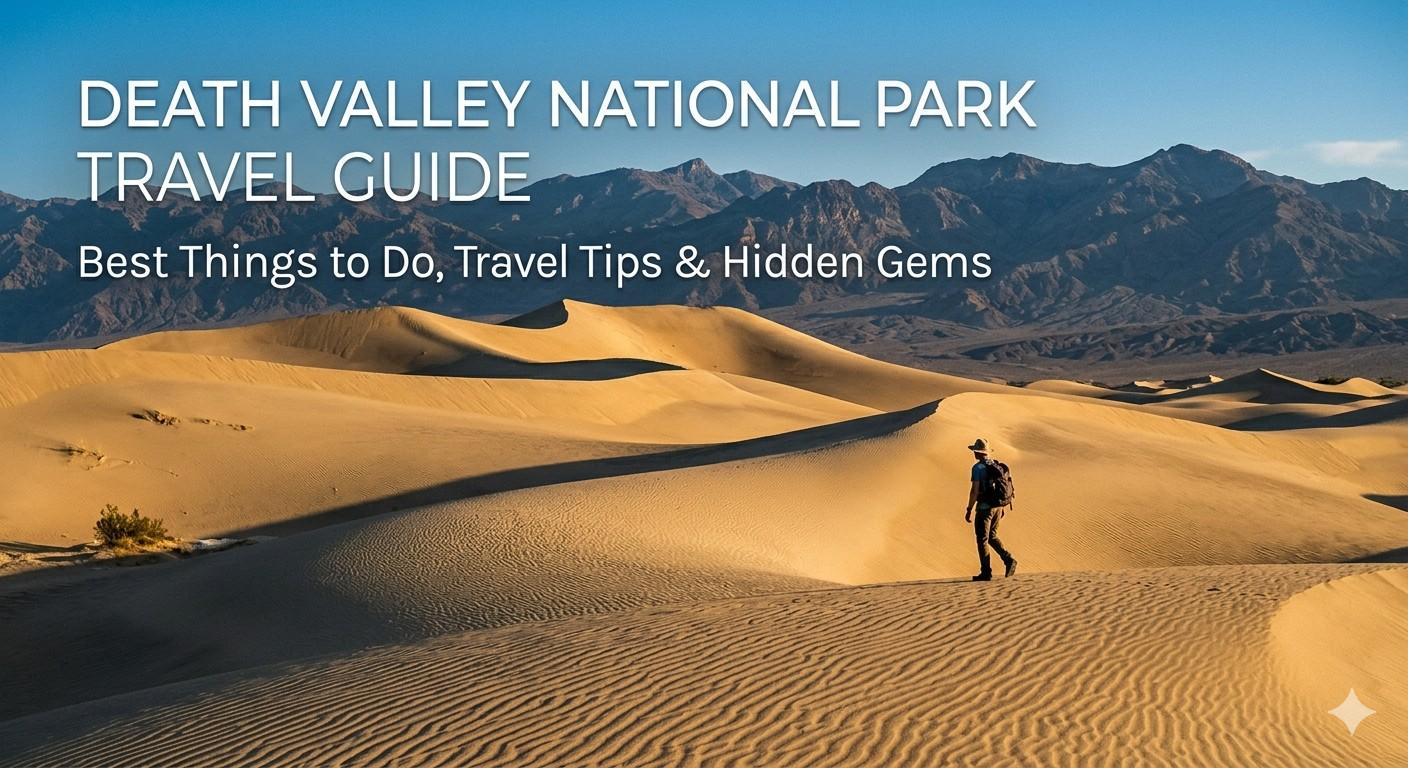
Death Valley National Park is one of the most extreme and unforgettable landscapes on Earth. Known as the hottest, driest, and lowest national park in North America, this vast desert wilderness stretches across eastern California and Nevada with surreal salt flats, colorful canyons, towering dunes, and star-filled skies.
But despite its harsh name, Death Valley National Park is packed with beauty, adventure, and surprisingly accessible attractions.
Whether you’re planning a road trip from Las Vegas, searching for the best sunrise viewpoints, or wondering when to visit safely, this guide covers everything you need to know for an incredible experience in 2026.
Why Death Valley National Park Is So Famous
Death Valley National Park attracts travelers because it feels almost otherworldly. The landscape changes dramatically from one stop to the next.
In a single day, you can:
- Walk on giant salt flats below sea level
- Watch sunrise over the Golden Badlands
- Explore colorful volcanic hills
- Hike through narrow slot canyons
- Drive scenic desert roads
- See some of the darkest night skies in the U.S.
The park also holds world records. Furnace Creek recorded the hottest air temperature ever measured on Earth: 134°F (56.7°C).
Yet visitors continue to return because the scenery is unlike anywhere else. Popular attractions like Badwater Basin, Zabriskie Point, and Artist’s Palette remain among the park’s biggest highlights.
Best Time to Visit Death Valley National Park
Winter (November–February)
Winter is the best overall time to visit Death Valley National Park.
Temperatures are comfortable, skies are clear, and hiking becomes much safer. Daytime highs usually range from 60°F to 75°F.
This season is ideal for:
- Hiking
- Photography
- Camping
- Scenic drives
- Stargazing
Spring (March–April)
Spring brings mild temperatures and occasional wildflowers.
In 2026, Death Valley experienced one of its best wildflower blooms since the famous 2016 superbloom due to unusual rainfall.
Spring is excellent for:
- Desert flowers
- Sunrise photography
- Outdoor exploration
Summer (May–September)
Summer in Death Valley National Park is dangerously hot.
Temperatures often exceed 120°F, making hiking risky during daylight hours. If visiting in summer:
- Carry extra water
- Stay near air-conditioned areas
- Avoid midday activity
- Monitor weather alerts
Fall (October)
October offers fewer crowds and cooling temperatures, making it a good shoulder season for road trips and photography.
Top Things to Do in Death Valley National Park
Visit Badwater Basin
Badwater Basin is the most famous attraction in Death Valley National Park.
At 282 feet below sea level, it’s the lowest point in North America. The endless white salt flats create an almost alien landscape, especially during sunrise and sunset.
Tips for Visiting Badwater Basin
- Go early in the morning for cooler temperatures
- Walk beyond the crowded boardwalk area
- Bring sunglasses because sunlight reflects strongly off the salt
- Visit after rain for rare mirror-like reflections
Watch Sunrise at Zabriskie Point
Why Zabriskie Point Is a Must-See
Zabriskie Point is one of the most photographed spots in Death Valley National Park.
The rolling badlands glow with orange, gold, and pink tones at sunrise. The short paved path makes it accessible for almost every visitor.
Photographers often arrive 30–45 minutes before sunrise for the best lighting.
Drive Artist’s Drive and Artist’s Palette
Artist’s Drive is a scenic 9-mile loop through colorful volcanic hills.
The main attraction is Artist’s Palette, where mineral deposits paint the mountains with shades of green, purple, pink, and red.
Late afternoon and sunset provide the richest colors.
Explore Mesquite Flat Sand Dunes
The Mesquite Flat Sand Dunes near Stovepipe Wells are among the easiest dunes to access in the park.
These wind-shaped dunes are especially beautiful during:
- Sunrise
- Sunset
- Moonlit nights
You can:
- Hike barefoot
- Try sandboarding
- Photograph dramatic shadows
- Watch the stars after dark
Many travelers say this is one of the most peaceful places in Death Valley National Park.
See the Park from Dante’s View
Dante’s View offers one of the most spectacular panoramas in the entire park.
From over 5,000 feet above sea level, you can see:
- Badwater Basin
- Panamint Mountains
- Telescope Peak
- Vast desert valleys
One reason visitors love Dante’s View is the temperature difference. It’s often 15–25°F cooler than the valley floor.
Hike Mosaic Canyon
Mosaic Canyon is one of the best hikes in Death Valley National Park for beginners and intermediate hikers.
Highlights include:
- Smooth marble walls
- Narrow canyon passages
- Polished rock formations
- Quiet desert scenery
Go early in the day to avoid heat and crowds.
Visit Devil’s Golf Course
Despite the strange name, Devil’s Golf Course is one of the park’s most unique geological sites.
Sharp salt crystal formations cover the ground in every direction. The area looks rugged, chaotic, and almost prehistoric.
You’ll hear crackling noises from shifting salt crystals during hot weather.
Experience Death Valley Stargazing
Death Valley National Park is certified as an International Dark Sky Park, making it one of the best stargazing locations in the world.
On clear nights, visitors can easily see:
- The Milky Way
- Meteor showers
- Planets
- Thousands of stars
Best Stargazing Spots
- Mesquite Flat Sand Dunes
- Harmony Borax Works
- Badwater Basin
- Dante’s View
Winter and spring usually offer the clearest skies.
Hidden Gems in Death Valley National Park
Ubehebe Crater
This massive volcanic crater formed after an explosion thousands of years ago.
The rim hike provides incredible views, and adventurous hikers can descend into the crater itself.
Racetrack Playa
Racetrack Playa is famous for its mysterious “moving rocks.”
These stones appear to slide across the dry lakebed, leaving long trails behind them.
Scientists later discovered that thin sheets of ice combined with wind cause the movement.
A high-clearance vehicle is strongly recommended for this remote location.
Salt Creek Boardwalk
The Salt Creek Boardwalk recently reopened after flood damage restoration.
This short walk lets visitors see the rare Salt Creek pupfish, a tiny species uniquely adapted to survive in salty desert water.
How Many Days Do You Need in Death Valley National Park?
1 Day
You can see:
- Zabriskie Point
- Badwater Basin
- Artist’s Palette
- Mesquite Flat Dunes
2–3 Days
This is ideal for most travelers.
You’ll have time for:
- Scenic drives
- Hiking
- Stargazing
- Sunrise and sunset photography
4+ Days
Perfect for:
- Backcountry adventures
- Off-road exploration
- Long hikes
- Remote attractions like Racetrack Playa
Essential Travel Tips for Death Valley National Park
Bring More Water Than You Think
Dehydration happens quickly in desert climates.
Carry:
- At least 1 gallon per person daily
- Electrolytes
- Sun protection
Check Road Conditions
Flash floods occasionally damage roads and trails.
Before visiting, check:
- Park alerts
- Weather forecasts
- Road closures
Fuel Up Early
Gas stations are limited and expensive inside the park.
Fuel up before entering whenever possible.
Download Offline Maps
Cell service is extremely limited across Death Valley National Park.
Offline navigation apps are essential.
Start Activities Early
The best time for hiking and sightseeing is usually before 10 AM.
Sunrise also provides the best photography conditions.
Where to Stay Near Death Valley National Park
Inside the Park
Popular options include:
- The Oasis at Death Valley
- Furnace Creek Campground
- Stovepipe Wells Village
These locations provide easy access to major attractions.
Nearby Towns
Budget-friendly alternatives include:
- Pahrump, Nevada
- Beatty, Nevada
- Lone Pine, California
Las Vegas is also a popular starting point for road trips.
Sample 2-Day Death Valley National Park Itinerary
Day 1
- Sunrise at Zabriskie Point
- Explore Badwater Basin
- Visit Devil’s Golf Course
- Drive Artist’s Drive
- Sunset at Mesquite Flat Sand Dunes
Day 2
- Sunrise at Dante’s View
- Hike Mosaic Canyon
- Visit Ubehebe Crater
- Stargazing after dark
FAQs About Death Valley National Park
Is Death Valley National Park worth visiting?
Absolutely. The park offers some of the most unique desert landscapes in the world, from giant salt flats to colorful mountains and dunes.
What is the best month to visit Death Valley National Park?
February through April is usually the best period because temperatures are comfortable and wildflowers may bloom.
Can you drive through Death Valley National Park in one day?
Yes, many major attractions are accessible by car, making it possible to experience highlights in a single day.
Is Death Valley safe for tourists?
Yes, if you prepare properly. The biggest risks are heat, dehydration, and remote driving conditions.
Does Death Valley get snow?
Yes. Higher elevations in the park occasionally receive snow during winter.
Final Thoughts on Death Valley National Park
Death Valley National Park is far more than a hot desert.
It’s a place of dramatic contrasts, quiet beauty, and unforgettable landscapes. From standing below sea level at Badwater Basin to watching sunrise over Zabriskie Point, every stop feels surreal.
The key to enjoying Death Valley is preparation. Visit during cooler months, bring plenty of water, and allow enough time to experience the park beyond the main viewpoints.
If you love photography, road trips, hiking, geology, or stargazing, Death Valley National Park deserves a spot on your travel bucket list.
