
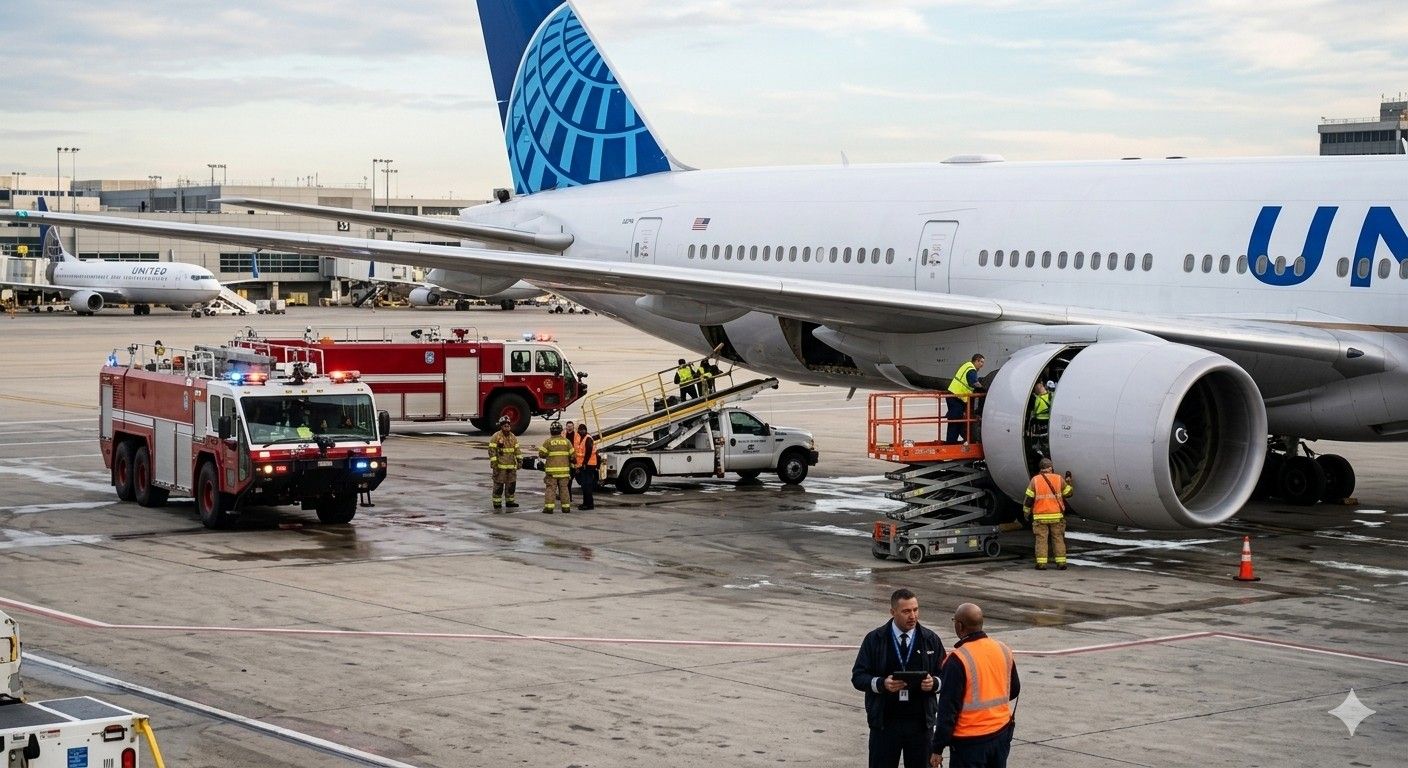
Air travel is one of the safest forms of transportation, but even the most advanced aircraft occasionally face unexpected situations. The United Airlines Flight UA770 emergency diversion became a major topic of discussion after the aircraft declared an in-flight emergency and diverted from its planned route.
Passengers, aviation enthusiasts, and frequent travelers searched for answers: What caused the diversion? Was anyone in danger? How do airlines handle such emergencies?
This guide provides a complete breakdown of the United Airlines Flight UA770 emergency diversion, including verified facts, aviation safety procedures, passenger concerns, and what travelers can learn from the incident.
Overview of the United Airlines Flight UA770 Emergency Diversion
The incident involved United Airlines Flight UA770, a long-haul international service operating between Barcelona, Spain (BCN) and Chicago O’Hare International Airport (ORD). During the flight, the crew declared an emergency and diverted to London Heathrow Airport (LHR) as a precautionary measure.
Despite the alarming headlines, the aircraft landed safely, and no injuries were reported among passengers or crew.
Quick Facts
| Detail | Information |
|---|---|
| Flight Number | UA770 |
| Airline | United Airlines |
| Aircraft | Boeing 787 Dreamliner |
| Route | Barcelona to Chicago |
| Diversion Airport | London Heathrow |
| Outcome | Safe landing |
| Injuries | None reported |
| Emergency Code | Squawk 7700 |
Timeline of the UA770 Incident
Understanding the sequence of events helps explain why the crew chose to divert.
Departure from Barcelona
Flight UA770 departed Barcelona on what was expected to be a routine transatlantic journey.
Weather conditions were reported as normal, and the aircraft began its climb toward cruising altitude.
Mid-Flight Warning
Approximately halfway through the European portion of the route, the flight crew reportedly received an indication that required immediate evaluation. Multiple aviation reports point to a possible cabin pressurization-related warning.
Emergency Declaration
The pilots declared an emergency using the internationally recognized Squawk 7700 transponder code. This code informs air traffic control that an aircraft requires priority assistance.
Diversion to London Heathrow
After assessing available airports, the crew selected London Heathrow due to:
- Runway availability
- Emergency response capabilities
- Maintenance support
- Passenger handling infrastructure
The aircraft changed course and proceeded toward Heathrow.
Safe Landing
The aircraft landed without incident. Emergency services were prepared as a precaution, but no evacuation was necessary. Passengers disembarked normally and were later rebooked or accommodated by the airline.
What Caused the United Airlines Flight UA770 Emergency Diversion?
One reason this incident attracted so much attention is that airlines rarely release detailed technical information immediately after an event.
Possible Cabin Pressurization Alert
Most aviation reports suggest that the United Airlines Flight UA770 emergency diversion was linked to a warning involving the aircraft’s pressurization system.
Aircraft cabins are pressurized to ensure passengers can breathe comfortably at cruising altitudes, which often exceed 35,000 feet.
If sensors detect abnormal pressure readings, pilots must treat the situation seriously.
Why Pilots Divert Even When Conditions Appear Normal
Many travelers assume an emergency declaration means an aircraft is in immediate danger.
In reality, aviation safety operates on a precaution-first approach.
Pilots may divert when:
- A system warning appears
- Safety margins decrease
- Further diagnosis is needed
- Regulations require inspection before continuing
This conservative approach is one reason commercial aviation maintains an excellent safety record.
Understanding Squawk 7700
What Does Squawk 7700 Mean?
One of the most searched phrases related to the incident is “Squawk 7700.”
Squawk 7700 is a transponder code used worldwide to indicate a general emergency.
When pilots enter this code:
- Air traffic control receives immediate notification
- The aircraft gets priority handling
- Nearby traffic may be rerouted
- Emergency services are alerted
Importantly, Squawk 7700 does not automatically mean the aircraft is about to crash.
It simply signals that the crew needs assistance or priority support.
Why Airlines Use It
The system allows pilots and controllers to communicate quickly during abnormal situations.
In many cases, aircraft that squawk 7700 land safely with no injuries, as happened in the United Airlines Flight UA770 emergency diversion.
How Flight Crews Handle Emergency Diversions
Pilot Decision-Making
Commercial airline pilots undergo extensive simulator training for emergency scenarios.
When a warning appears, pilots typically:
- Identify the issue
- Consult emergency checklists
- Coordinate with dispatch
- Communicate with air traffic control
- Determine whether diversion is necessary
The goal is always passenger safety.
Cabin Crew Responsibilities
While pilots manage the aircraft, flight attendants focus on passengers.
During a diversion, cabin crews:
- Provide instructions
- Answer passenger concerns
- Prepare the cabin if needed
- Coordinate with the cockpit
Professional communication often helps reduce panic during unexpected situations.
Passenger Experience During the UA770 Diversion
Passengers onboard reportedly experienced a calm and controlled response.
Many travelers first realized something unusual was happening when the aircraft changed course.
Typical passenger experiences during diversions include:
- Updated announcements from the captain
- Changes in arrival time
- Rebooking arrangements
- Additional ground delays
Although inconvenient, diversions are generally evidence that safety systems are working exactly as intended.
Why London Heathrow Was Chosen
Strategic Location
London Heathrow is one of the world’s busiest and best-equipped airports.
For a transatlantic flight crossing Europe, Heathrow offers:
- Long runways
- Advanced emergency response teams
- Aircraft maintenance facilities
- International passenger support
Operational Advantages
Airlines frequently choose major hubs during emergencies because they can quickly assist passengers and inspect aircraft.
This makes Heathrow a logical diversion point for flights operating between Europe and North America.
Aviation Safety Lessons from the United Airlines Flight UA770 Emergency Diversion
The United Airlines Flight UA770 emergency diversion highlights several important aviation principles.
Early Detection Saves Lives
Modern aircraft continuously monitor thousands of system parameters.
Sensors can identify issues long before passengers notice anything unusual.
Safety Comes Before Schedules
Airlines lose time and money when flights divert.
The fact that a diversion occurred demonstrates that safety decisions outweigh operational costs.
Training Makes a Difference
Commercial pilots train repeatedly for emergencies that they may never encounter in real life.
When incidents occur, crews rely on that training to make informed decisions.
Modern Aircraft Are Built with Redundancy
The Boeing 787 Dreamliner includes multiple backup systems designed to maintain safe operations even if one component experiences a problem.
Common Reasons Flights Make Emergency Diversions
The UA770 event also raises a broader question: why do flights divert?
Common causes include:
Mechanical Issues
Examples include:
- Engine indications
- Hydraulic warnings
- Electrical faults
- Pressurization alerts
Medical Emergencies
A passenger or crew member may require urgent medical treatment.
Security Concerns
Threats, suspicious behavior, or security alerts may require an immediate landing.
Weather Conditions
Severe storms, turbulence, or airport closures can force route changes.
Operational Factors
Fuel concerns, maintenance requirements, or airport restrictions occasionally contribute to diversions.
FAQs About the United Airlines Flight UA770 Emergency Diversion
Was anyone injured during the United Airlines Flight UA770 emergency diversion?
No. Reports indicate that all passengers and crew landed safely, and no injuries were reported.
Why did Flight UA770 divert to London Heathrow?
London Heathrow offered the nearest suitable combination of runway capacity, emergency services, maintenance support, and passenger facilities.
What is Squawk 7700?
Squawk 7700 is the universal emergency transponder code used by aircraft to notify air traffic control of an urgent situation.
Was the aircraft in danger?
Available information suggests the crew acted out of caution after receiving a system warning. The aircraft landed safely, indicating that emergency procedures worked as intended.
Are emergency diversions common?
They are relatively rare compared to the millions of flights that operate annually. However, diversions occur when safety considerations justify an alternate landing.
What happens to passengers after a diversion?
Airlines typically arrange rebooking, replacement aircraft, accommodations when necessary, and customer support services.
Conclusion
The United Airlines Flight UA770 emergency diversion serves as a powerful example of how modern aviation safety systems are designed to prevent small issues from becoming major emergencies.
While the incident generated widespread attention, the most important fact is that the aircraft landed safely, passengers remained unharmed, and established safety protocols functioned exactly as intended. Reports indicate that a possible pressurization-related warning prompted the crew to declare an emergency and divert to London Heathrow, where the flight concluded without incident.
For travelers, the key takeaway is reassuring: emergency diversions are not signs of failure. They are evidence of an industry built around proactive decision-making, rigorous training, and a commitment to safety above all else.
As aviation technology continues to evolve through 2026 and beyond, incidents like the United Airlines Flight UA770 emergency diversion demonstrate why commercial air travel remains one of the safest ways to travel worldwide.
