
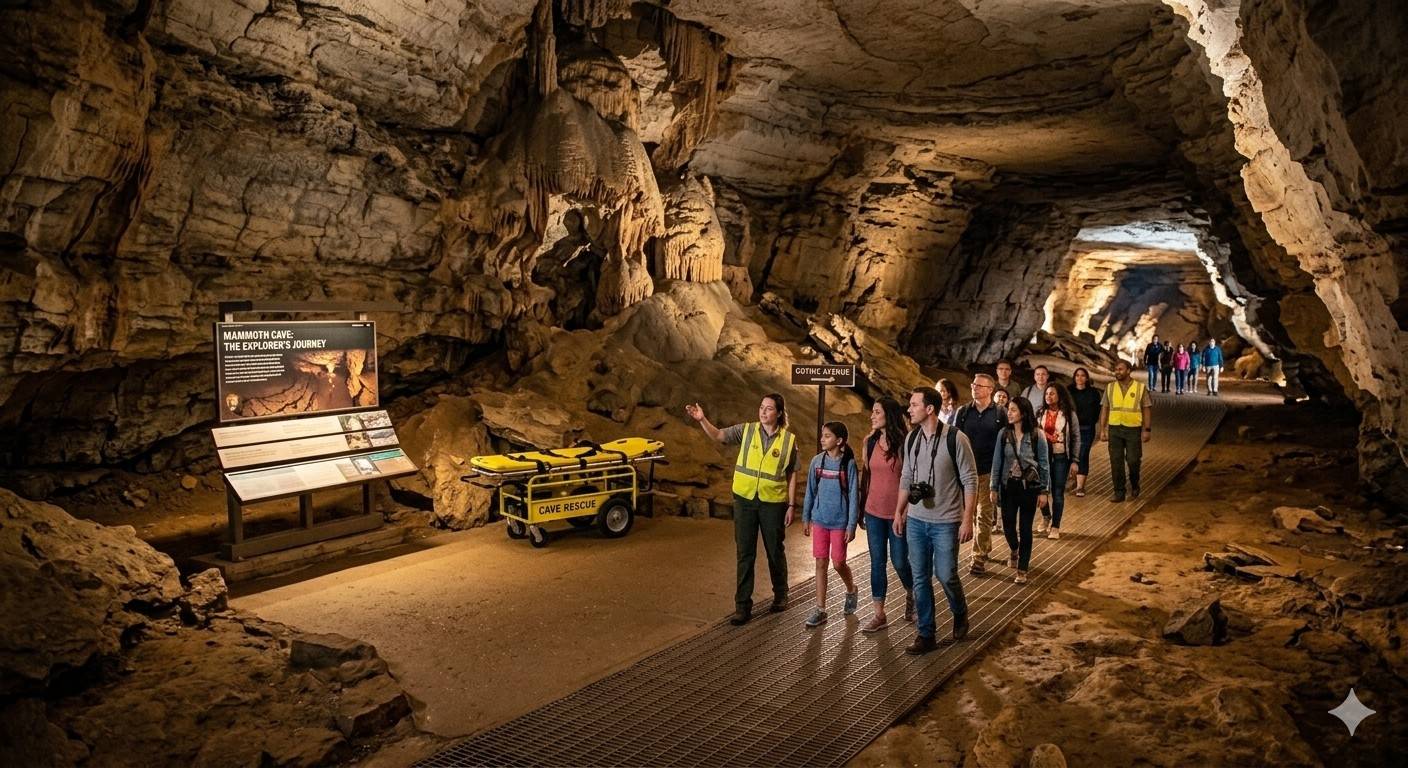
Imagine standing at the entrance of a cave so vast that explorers are still discovering new passages today. That’s exactly what awaits at Mammoth Cave National Park, one of America’s most fascinating natural wonders.
Located in Kentucky, USA, Mammoth Cave National Park protects the longest known cave system on Earth, with more than 420 miles (675+ km) of surveyed passageways and ongoing discoveries expanding the network every year. The park is also a UNESCO World Heritage Site and International Biosphere Reserve, recognized for its extraordinary geology, biodiversity, and cultural history.
Whether you’re planning a visit, researching its history, or simply curious about what makes this underground world so special, this guide covers everything you need to know.
What Is Mammoth Cave National Park?
Mammoth Cave National Park is a protected area in south-central Kentucky that preserves the world’s longest known cave system along with forests, rivers, wildlife habitats, and historic sites. The park was officially established in 1941 and later earned UNESCO World Heritage status in 1981.
The name “Mammoth” doesn’t come from prehistoric mammoths. Instead, it refers to the enormous size of the cave’s chambers and passageways.
Quick Facts
- Location: Kentucky, United States
- Established: 1941
- Cave Length: Over 420 miles surveyed
- UNESCO World Heritage Site
- International Biosphere Reserve
- Home to the Green River and Nolin River
- More than 50,000 acres of protected land
Why Is Mammoth Cave National Park Famous?
Many caves around the world are beautiful, but Mammoth Cave National Park stands apart because of its incredible size and scientific importance.
The cave system is more than twice as long as many competing cave networks, and geologists believe hundreds of additional miles may remain undiscovered.
Unique Features of Mammoth Cave
- Massive underground chambers
- Underground rivers and streams
- Rare gypsum formations
- Historic mining areas
- Ancient Native American artifacts
- Cave-adapted wildlife
- Complex limestone geology
The cave preserves millions of years of geological history and supports one of the richest cave ecosystems in the world.
The Fascinating History of Mammoth Cave
Human interaction with Mammoth Cave dates back thousands of years.
Native American Exploration
Archaeological evidence shows that Indigenous peoples explored and used the cave over 4,000 years ago. Ancient tools, artifacts, and preserved remains have been discovered throughout the system.
War of 1812 Mining Operations
During the War of 1812, workers mined cave minerals to produce saltpeter, a key ingredient in gunpowder. The cave became an important resource when imported supplies were limited.
Early Tourism
Mammoth Cave became one of North America’s earliest tourist attractions in the 1800s. Guided cave tours have been operating continuously since 1816, making it one of the oldest cave tourism destinations in the world.
Exploring the Cave Tours at Mammoth Cave National Park
A visit to Mammoth Cave National Park isn’t complete without joining a cave tour.
The National Park Service offers a variety of guided experiences ranging from easy walks to challenging underground adventures.
Historic Tour
This is the most popular option for first-time visitors.
Highlights include:
- Historic Entrance
- Mammoth Dome
- Bottomless Pit
- Fat Man’s Misery
- Historic cave routes
The tour combines natural beauty with stories about mining, exploration, and early tourism.
Frozen Niagara Tour
Perfect for visitors who want to see spectacular cave formations.
You’ll encounter:
- Stalactites
- Stalagmites
- Draperies
- Flowstone formations
Extended Adventure Tours
For experienced visitors seeking a deeper experience:
- Longer walking distances
- Narrow passageways
- Crawling sections
- Lantern-lit exploration
Reservations are highly recommended, especially during peak travel seasons.
Above-Ground Adventures in Mammoth Cave National Park
Many travelers focus only on the cave, but the surface landscape is equally impressive.
Hiking Trails
The park offers dozens of miles of trails through forests, ridges, and river valleys.
Popular options include:
- Cedar Sink Trail
- Green River Bluffs Trail
- Heritage Trail
- Dixon Cave Trail
These trails showcase Kentucky’s karst landscape, sinkholes, and scenic overlooks.
Kayaking and Canoeing
The Green River is one of the park’s highlights.
Visitors can:
- Paddle scenic river sections
- Observe wildlife
- Fish in designated areas
- Enjoy peaceful water-based recreation
Camping
The park features several campgrounds, including:
- Mammoth Cave Campground
- Maple Springs Campground
- Backcountry campsites
Camping provides excellent access to both cave tours and hiking trails.
Wildlife and Biodiversity
One reason UNESCO recognizes Mammoth Cave National Park is its extraordinary biodiversity.
More than 130 species have been documented within the cave ecosystem alone.
Cave-Dwelling Species
Unique cave residents include:
- Blind cave fish
- Albino crayfish
- Cave crickets
- Rare salamanders
- Specialized cave insects
These animals have evolved to survive in complete darkness.
Surface Wildlife
Above ground, visitors may encounter:
- White-tailed deer
- Wild turkeys
- Foxes
- Bats
- Songbirds
- Reptiles and amphibians
The combination of forests, rivers, and cave environments creates exceptional biodiversity.
Geological Wonders of Mammoth Cave National Park
The cave formed through a process known as karst development.
Over millions of years, slightly acidic groundwater dissolved layers of limestone, creating tunnels, chambers, shafts, and underground rivers.
Notable Geological Features
Massive Passageways
Some cave corridors are wide enough to resemble underground highways.
Gypsum Flowers
These delicate crystal formations are among the rarest cave features in the world.
Sinkholes and Karst Landscapes
The landscape above the cave contains:
- Sinkholes
- Springs
- Underground streams
- Disappearing rivers
These features continue shaping the cave system today.
Best Time to Visit Mammoth Cave, National Park
The park is open year-round, but each season offers a different experience.
Spring (March–May)
Best for:
- Wildflowers
- Mild temperatures
- Active wildlife
Summer (June–August)
Best for:
- Family vacations
- River activities
- Full tour availability
Expect larger crowds.
Fall (September–November)
Best for:
- Autumn foliage
- Comfortable hiking weather
- Photography
Winter (December–February)
Best for:
- Smaller crowds
- Peaceful hiking
- Unique cave atmosphere
Always check current conditions and tour availability before traveling.
Essential Visitor Tips
To get the most from your visit:
Book Tours Early
Popular tours often sell out weeks in advance.
Wear Proper Footwear
Cave floors can be uneven and slippery.
Bring Layers
The cave remains around 54°F (12°C) year-round.
Follow Wildlife Protection Rules
Protecting cave ecosystems helps preserve rare species and habitats.
Plan More Than One Day
Many visitors discover that a single day isn’t enough to explore both the cave and surface attractions. Visitor experiences frequently highlight spending multiple days to fully appreciate the park.
FAQs About Mammoth Cave National Park
How long is Mammoth Cave?
The surveyed cave system exceeds 420 miles (675+ km), making it the longest known cave system in the world. Scientists continue to discover new passages.
Is Mammoth Cave worth visiting?
Absolutely. It offers a combination of underground exploration, hiking, wildlife viewing, river recreation, and fascinating history that few destinations can match.
Can you explore Mammoth Cave without a guide?
Most cave access requires participation in official guided tours for safety and conservation reasons.
How much time do you need at Mammoth Cave National Park?
One full day is enough for a cave tour and a short hike, but two to three days allow visitors to experience the park more completely.
Why is Mammoth Cave a UNESCO World Heritage Site?
The park earned UNESCO recognition because of its exceptional geological features, biodiversity, and the world’s largest known cave network.
Are there animals inside the cave?
Yes. The cave supports numerous specialized species, including blind fish, crayfish, insects, and bats adapted to life underground.
Conclusion
Mammoth Cave National Park is far more than a giant cave. It is a living scientific laboratory, a historic treasure, a biodiversity hotspot, and one of the most remarkable national parks in the world.
From exploring vast underground chambers to hiking scenic trails above ground, visitors discover an experience unlike any other. Whether you’re a geology enthusiast, outdoor adventurer, wildlife lover, or family traveler, Mammoth Cave National Park offers unforgettable discoveries around every corner.
If you’re planning a trip, reserve your cave tour early, allow enough time to explore both the cave and the surface landscapes, and prepare to experience one of Earth’s greatest natural wonders.
