
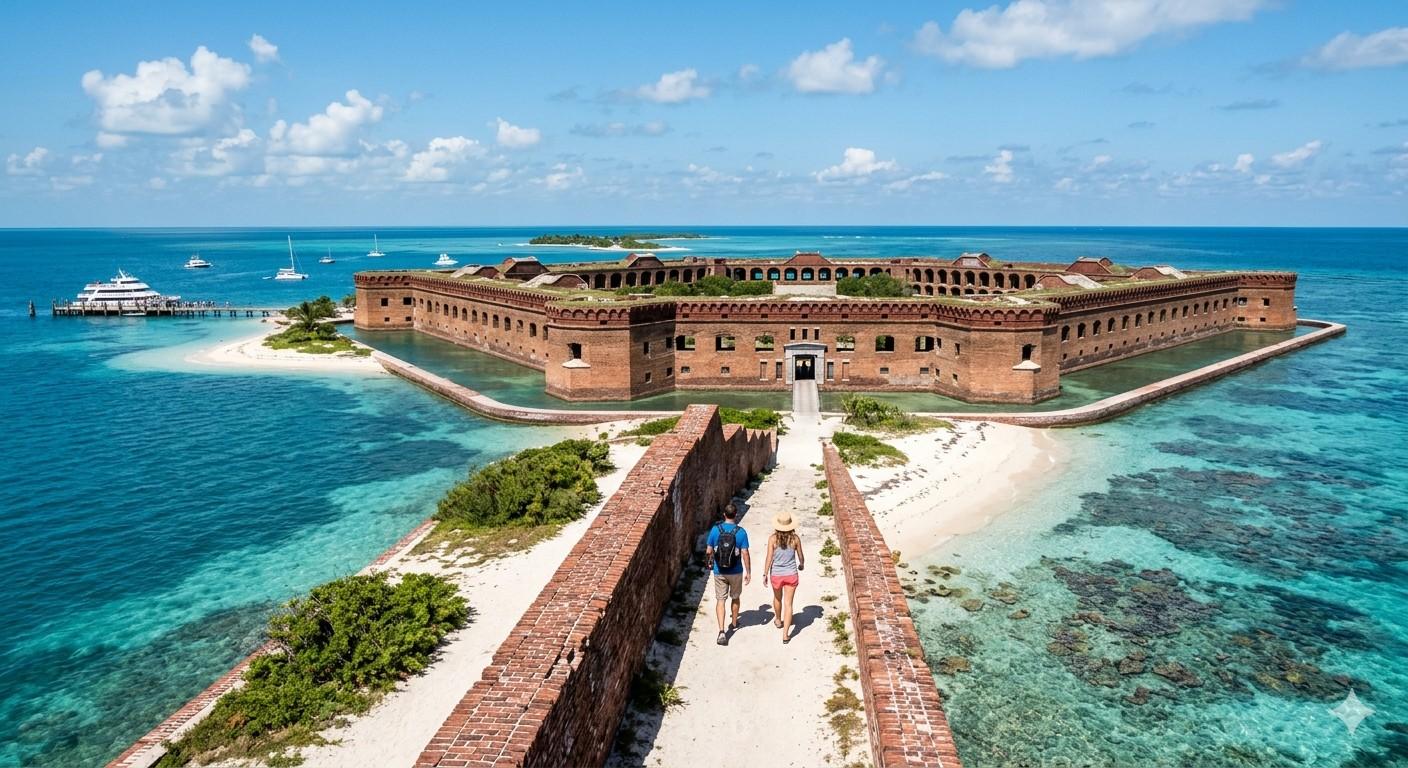
Dry Tortugas National Park sits about 70 miles west of Key West, Florida, surrounded by some of the clearest water in the Gulf of Mexico. Unlike most national parks, this one is mostly underwater, making it a dream destination for snorkelers, divers, history lovers, and travelers looking for a true escape.
Many visitors struggle with planning because the park is remote and access is limited. This guide explains everything you need to know, from transportation options and costs to the best activities, camping tips, and seasonal considerations. Whether you’re planning a day trip or an overnight adventure, you’ll find the practical details that many travel articles leave out.

What Is Dry Tortugas National Park?
Established in 1992, Dry Tortugas National Park protects seven small islands and approximately 100 square miles of marine and island habitat. The park is famous for Fort Jefferson, one of the largest masonry forts ever built in the United States.
Quick facts
Location
70 miles west of Key West, Florida
Established
1992
Size
About 100 square miles
Main attraction
Fort Jefferson
Best for
Snorkeling, diving, camping, birdwatching, and history
The name “Dry Tortugas” comes from the abundance of sea turtles (“tortugas” in Spanish) observed by early explorers and the lack of fresh water sources (“dry”).
How to Get to Dry Tortugas National Park
One of the most important things to understand is that you cannot simply drive to Dry Tortugas National Park. Transportation must be arranged in advance.
Ferry from Key West
Operator
Yankee Freedom III
Travel time
About 2.5 hours each way
Included
Breakfast, lunch, snorkeling gear, park entry
Best for
Most first-time visitors
The ferry is the most popular option. Because seats often sell out weeks in advance, booking early is highly recommended.
Seaplane
Travel time
About 40 minutes from Key West
Advantages
More time in the park and spectacular aerial views
Drawback
Significantly more expensive than the ferry
Private Boat
Experienced boaters can visit by private vessel. The trip requires careful planning because of the distance, weather conditions, fuel requirements, and limited services in the park.
Best Time to Visit Dry Tortugas National Park
Winter & Spring
Generally considered the best time to visit.
-
Comfortable temperatures
-
Lower humidity
-
Excellent visibility for snorkeling and diving
-
Peak tourist season
Summer & Fall
Offers advantages but comes with weather considerations.
-
Warmer water temperatures
-
Fewer crowds on some dates
-
Higher chance of thunderstorms
-
Hurricane season runs from June through November
If your schedule is flexible, aim for March through May for the best balance of weather, water conditions, and wildlife viewing.
Top Things to Do in Dry Tortugas National Park
Explore Fort Jefferson

Fort Jefferson dominates Garden Key and is the park’s most recognizable landmark. The unfinished 19th-century fortress features massive brick walls, historic gun emplacements, and panoramic views from the top levels.
Take time to walk the moat wall and explore the interior courtyards. Many visitors spend 1–2 hours discovering the fort alone.
Snorkeling
Snorkeling is often the highlight of a visit. The clear water around Garden Key and nearby reefs offers opportunities to see:
-
Colorful tropical fish
-
Coral formations
-
Sea turtles
-
Rays
-
Occasional nurse sharks
Even beginners can enjoy the shallow snorkeling areas near the beach.
Diving
Scuba divers are drawn to the park’s reefs and shipwreck sites. The waters contain numerous historic wrecks, including remnants from the 19th century.
Birdwatching
Dry Tortugas National Park is an important stopover for migratory birds. During spring migration, birders may observe dozens of species resting on the islands.
Photography
Sunrises, sunsets, turquoise water, and the dramatic fort architecture create excellent photography opportunities. A wide-angle lens is particularly useful.
Camping in Dry Tortugas National Park
Camping is one of the most memorable ways to experience the park because most day visitors leave in the afternoon.
Where can you camp
Primitive campground on Garden Key near Fort Jefferson.
Reservations
Required if arriving by ferry; ferry camping spaces are limited.
What to bring
Tent, sleeping gear, food, and plenty of water.
Important
No fresh water, fuel, or supplies are available in the park.
Campers often report that the evenings are the best part of the trip, with spectacular stargazing and a peaceful atmosphere after the ferry departs.
What to Bring
Because services are extremely limited, preparation is essential.
Recommended packing list
-
Reusable water bottle
-
High-SPF sunscreen
-
Hat and sunglasses
-
Swimwear and quick-dry clothing
-
Snorkeling gear (if not provided by your tour)
-
Camera or waterproof phone case
-
Light rain jacket
-
Cash for snacks or souvenirs on the ferry
Wildlife You May See

The park protects diverse marine and bird life.
Common sightings include:
-
Loggerhead and green sea turtles
-
Parrotfish
-
Angelfish
-
Tarpon
-
Brown pelicans
-
Sooty terns
-
Magnificent frigatebirds
Always observe wildlife from a respectful distance and follow National Park Service guidelines.
Costs and Reservations
Costs vary depending on transportation method, but most visitors should budget for:
|
Expense |
Typical range |
|---|---|
|
Ferry ticket |
Several hundred dollars per person |
|
Seaplane ticket |
Higher than ferry pricing |
|
Camping fee |
Modest nightly fee |
|
Park entrance fee |
Usually included with ferry or seaplane packages |
Reservations are strongly recommended year-round, especially for ferry trips and camping.
Accessibility and Visitor Facilities
Garden Key offers restrooms, picnic areas, and a visitor contact station. Accessibility can be challenging because of uneven surfaces, historic fort structures, and boat transfers. Travelers with mobility concerns should contact transportation providers and the National Park Service for current accessibility information.
Frequently Asked Questions
Can you visit Dry Tortugas National Park in one day?
Yes. Most visitors take a day trip from Key West using the ferry or seaplane. A day trip provides enough time to tour Fort Jefferson and snorkel.
Is Dry Tortugas worth visiting?
For travelers interested in snorkeling, history, wildlife, or remote island scenery, Dry Tortugas National Park is often considered one of Florida’s most unique destinations.
How long should you stay?
A full day is sufficient for most visitors. Campers who stay overnight enjoy a quieter experience and additional opportunities for snorkeling, stargazing, and photography.
Do you need snorkeling experience?
No. Beginners can enjoy the shallow snorkeling areas near Garden Key. Always use proper safety precautions and follow any guidance from tour operators.
Can you bring your own food?
Yes. Bringing snacks and drinks is recommended, especially for campers.
Conclusion
Dry Tortugas National Park offers a rare combination of history, marine wildlife, and remote island beauty. The journey requires more planning than a typical national park visit, but the reward is an experience that feels far removed from mainland Florida.
Whether you’re snorkeling over coral reefs, walking the massive walls of Fort Jefferson, or watching the sunset after the day-trippers leave, Dry Tortugas National Park delivers a memorable adventure that stands out even among America’s most famous national parks.
